Data Brokerage 2026: Your Digital Information Traded
Understanding data brokerage in 2026 reveals a complex industry where personal digital footprints are systematically collected, analyzed, and sold to inform targeted advertising, personalize services, and influence decision-making across various sectors.
Have you ever wondered why that ad for a product you just discussed with a friend suddenly appears on your social media feed? Or how seemingly unrelated companies know so much about your preferences and habits? Welcome to the world of data brokerage, a vast and often opaque industry that is fundamentally reshaping our digital lives. In 2026, understanding data brokerage: how your digital information is traded is more crucial than ever, as the sophistication and scale of these operations continue to grow, influencing everything from the ads you see to the loan applications you submit.
the evolving landscape of data brokerage in 2026
The data brokerage industry in 2026 is a dynamic and increasingly sophisticated ecosystem. It operates at the intersection of technological advancement, consumer behavior, and regulatory frameworks, constantly adapting to new data sources and analytical capabilities. Far from a niche market, it has become a cornerstone of the digital economy, fueling personalized experiences and targeted marketing strategies that define much of our online interactions.
This evolution is driven by several factors, including the proliferation of connected devices, the increasing sophistication of AI and machine learning algorithms, and a global appetite for highly granular consumer insights. Data brokers are no longer just collecting basic demographic information; they are now synthesizing complex behavioral patterns, predictive analytics, and real-time data streams to create incredibly detailed profiles of individuals.
what constitutes personal data today?
In 2026, the definition of “personal data” has expanded significantly beyond traditional identifiers. It now encompasses a vast array of digital breadcrumbs we leave daily.
- Behavioral Data: Browsing history, app usage, search queries, click patterns, and online activity duration.
- Transactional Data: Purchase history, payment methods, return patterns, and loyalty program participation.
- Location Data: GPS coordinates, Wi-Fi access points, cell tower triangulation, and movement patterns.
- Social Data: Interactions on social media platforms, connections, content shared, and sentiment expressed.
- Biometric Data: Facial recognition data, voice patterns, and even gait analysis from smart devices (where legally permissible).
- Inferred Data: Predictions about interests, income, health status, and political leanings derived from other data points.
Understanding this broad scope is the first step in comprehending the depth of information available to data brokers. Each piece contributes to a larger, more comprehensive digital identity that is constantly being refined and updated.
The sheer volume and diversity of data points mean that data brokers can construct incredibly precise and often surprising profiles. These profiles are not static; they are living documents that evolve with every new interaction and data input. This continuous refinement makes the data highly valuable, as it offers a real-time snapshot of an individual’s life, preferences, and potential future actions. The implications for privacy and autonomy are profound, as these profiles can be used in ways individuals may not anticipate or consent to.
the mechanics of data collection and aggregation
The process by which data brokers acquire and consolidate information is intricate, relying on a multitude of sources and advanced technological capabilities. It’s not a single, straightforward pipeline but rather a vast network of data flows that converge to form comprehensive individual profiles. This aggregation allows brokers to create a richer, more nuanced understanding of individuals than any single data source could provide.
Data collection methods have become increasingly sophisticated, moving beyond simple public records. They now include complex data-sharing agreements, advanced web scraping techniques, and the integration of data from various online and offline touchpoints. The goal is to leave no digital stone unturned, building a complete picture of consumer behavior and preferences.
where do data brokers get their information?
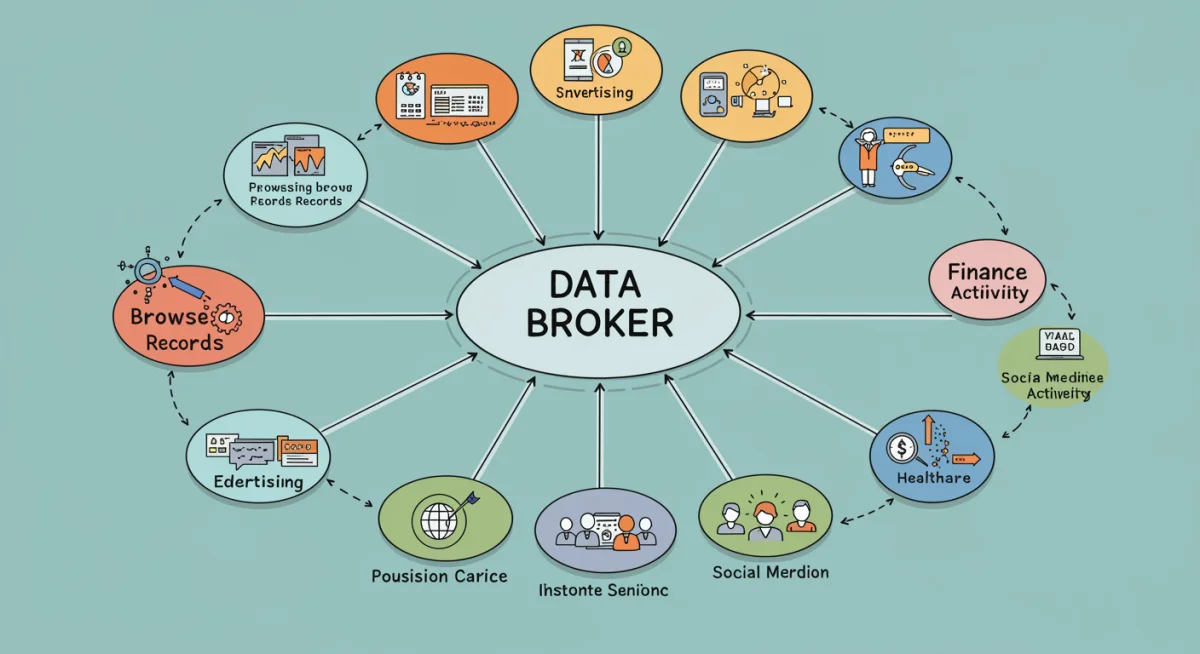
Data brokers leverage a diverse range of sources to build their extensive databases. These sources can be broadly categorized into public, commercial, and inferred data.
- Public Records: Government records such as property deeds, marriage licenses, voter registration, and court documents. While publicly accessible, brokers aggregate this information for scale.
- Commercial Sources: This is a vast category including purchase history from retailers, magazine subscriptions, warranty registrations, website cookies, app usage data, social media activity, and loyalty program data. Many companies, often unknowingly to the consumer, sell or share their customer data.
- Internet Activity: Browsing habits, search queries, IP addresses, device identifiers, and location data collected from websites, mobile apps, and connected devices. This forms a significant portion of behavioral profiles.
- Offline Sources: Demographic data from surveys, census information, direct mail responses, and even call center interactions.
The combination of these diverse data streams allows data brokers to cross-reference and validate information, creating highly accurate and detailed profiles. This aggregation process is where the true power of data brokerage lies, as fragmented pieces of information come together to form a coherent, actionable narrative about an individual. The more data points they can connect, the more valuable the profile becomes to potential buyers.
who buys your data and why?
Once collected and meticulously refined, your digital information becomes a valuable commodity, traded among various entities for a multitude of purposes. The buyers are as diverse as the data itself, ranging from global corporations to small businesses, each seeking specific insights to achieve their objectives. The motivations behind these purchases are primarily economic, driven by the desire for efficiency, personalization, and competitive advantage.
The market for personal data is robust, with brokers acting as intermediaries between data sources and data consumers. This ecosystem thrives on the ability to segment, target, and predict consumer behavior with increasing accuracy. Understanding who these buyers are and their intentions is key to grasping the full impact of data brokerage on our lives.
the primary consumers of brokered data
The demand for personal data spans numerous industries, each utilizing the information to enhance their operations and reach their target audiences more effectively.
- Advertisers and Marketers: This is arguably the largest segment. Companies use data to create highly targeted advertising campaigns, personalize product recommendations, and optimize marketing spend. They aim to show you what you’re most likely to buy at the moment you’re most likely to buy it.
- Financial Institutions: Banks, lenders, and insurance companies use data for credit scoring, fraud detection, risk assessment, and to tailor financial products. Your spending habits and online behavior can influence your eligibility for loans or insurance premiums.
- Healthcare Providers and Pharmaceutical Companies: Data can be used for epidemiological research, identifying potential patients for clinical trials, and understanding health trends. While often anonymized, the underlying data is derived from personal information.
- Political Campaigns: Political parties and campaigns leverage data to identify potential voters, tailor messaging, and optimize outreach efforts during elections. This can influence public opinion and election outcomes.
- Employers: Some employers use background check services that rely on data brokers to screen potential candidates, looking for insights into their character, financial stability, and online presence.
- Law Enforcement and Government Agencies: In certain circumstances, agencies may purchase data for investigative purposes, public safety initiatives, or national security.
Each of these uses, while potentially beneficial in some contexts, raises significant ethical and privacy concerns. The broad application of brokered data means that individuals are impacted in ways they may not even realize, from the products they are offered to the opportunities they are presented with.
the darker side: ethical dilemmas and privacy concerns
The vast and often unregulated nature of data brokerage gives rise to significant ethical dilemmas and profound privacy concerns. While the industry touts the benefits of personalization and efficiency, the potential for misuse, discrimination, and erosion of individual autonomy is substantial. As technology advances, these concerns become more acute, demanding a closer examination of the moral boundaries.
The core issue lies in the lack of transparency and control individuals have over their own data. Much of the data collection occurs without explicit, informed consent, leaving consumers vulnerable to practices they are unaware of. This asymmetry of information creates a power imbalance, where individuals are largely powerless to prevent their data from being traded.
potential harms and misuses of personal data
The aggregation and sale of personal data, while framed as beneficial for commerce, carries inherent risks that can directly impact individuals.
- Discrimination: Data profiles can inadvertently or intentionally lead to discrimination in housing, employment, insurance, or credit based on inferred characteristics like race, income, or health status.
- Targeted Exploitation: Vulnerable populations, such as the elderly or financially distressed, can be targeted with predatory advertisements or scams based on their detailed profiles.
- Identity Theft and Fraud: Large databases of personal information are attractive targets for cybercriminals. A breach in a data broker’s system can expose millions to identity theft.
- Erosion of Privacy: The constant surveillance and profiling diminish the expectation of privacy in daily life, leading to a chilling effect on free expression and association.
- Manipulation and Influence: Detailed psychological profiles can be used to manipulate political opinions, purchasing decisions, or even personal beliefs, undermining individual autonomy.
- Security Risks: The more places your data resides, the higher the risk of it falling into the wrong hands through data breaches or unauthorized access.
These potential harms underscore the urgent need for robust regulatory frameworks and greater corporate accountability. Without them, the promise of a personalized digital world risks becoming a dystopian reality where individuals are constantly tracked, profiled, and potentially exploited.
regulatory efforts and consumer rights in 2026
In response to growing public concern and the escalating scale of data brokerage, regulatory bodies worldwide, including in the United States, have intensified efforts to create more robust data protection laws. By 2026, the landscape of consumer rights regarding personal data has evolved significantly, though challenges remain in enforcement and global harmonization. These regulations aim to strike a balance between fostering innovation and protecting individual privacy.
The push for stronger regulations is driven by a recognition that self-regulation by the industry has proven insufficient. Consumers are demanding greater transparency and control, and governments are beginning to respond with legislation that grants individuals more power over their digital footprints. However, the global nature of data flow means that effective regulation often requires international cooperation, which can be complex to achieve.
key legislation and emerging protections
Several landmark regulations have set precedents and continue to shape the data privacy landscape in 2026, empowering consumers with more rights.
- GDPR (General Data Protection Regulation): While a European regulation, its extraterritorial reach influences how data brokers worldwide handle the data of EU citizens, setting a high standard for consent, data access, and erasure.
- CCPA/CPRA (California Consumer Privacy Act / California Privacy Rights Act): These acts grant California residents significant rights, including the right to know what personal information is collected about them, the right to delete it, and the right to opt-out of its sale. These have influenced similar laws in other US states.
- State-Level Privacy Laws: Beyond California, states like Virginia (VCDPA), Colorado (CPA), Utah (UCPA), and Connecticut (CTDPA) have enacted their own comprehensive privacy laws, creating a patchwork of regulations across the US.
- Federal Discussions: Ongoing discussions at the federal level in the US aim to establish a unified national privacy law, which could streamline compliance and provide consistent protections across all states.
- Data Minimization Principles: Many regulations now emphasize data minimization, requiring companies to collect only the data strictly necessary for their stated purpose.
Despite these advancements, navigating the complex web of privacy laws can be challenging for both consumers and businesses. The onus often falls on individuals to exercise their rights, which requires awareness and effort. The effectiveness of these regulations ultimately depends on robust enforcement and the willingness of companies to comply fully.
future trends: AI, blockchain, and the data economy
Looking ahead to the mid-2020s and beyond, the data brokerage industry is poised for further transformation, driven by emerging technologies like artificial intelligence and blockchain. These innovations present both new challenges and potential solutions to the complex issues surrounding data privacy and ownership. The data economy is not stagnant; it is continually evolving, and these trends will redefine how digital information is traded and managed.
AI will amplify the capabilities of data brokers, enabling more sophisticated analysis and predictive modeling, while blockchain offers a decentralized approach that could fundamentally alter data ownership and consent mechanisms. Understanding these future trends is vital for anticipating the next phase of our digital lives and preparing for the changes they will bring.
technological shifts impacting data brokerage
Several technological advancements are set to significantly influence the future of data brokerage, from how data is processed to how it is secured.
- Advanced AI and Machine Learning: AI will enable data brokers to extract even deeper insights from vast datasets, predict behaviors with greater accuracy, and automate the creation of highly nuanced profiles. This could lead to more personalized, but also more intrusive, targeting.
- Edge Computing: Processing data closer to its source (e.g., on smart devices) could reduce the need to send raw data to centralized brokers, potentially enhancing privacy by keeping sensitive information localized.
- Blockchain and Decentralized Identity: Distributed ledger technologies could offer individuals greater control over their digital identity and data. By creating verifiable and self-sovereign identities, users might selectively grant access to specific data points, logging consent and usage on an immutable ledger.
- Privacy-Enhancing Technologies (PETs): Techniques like federated learning, differential privacy, and homomorphic encryption allow data to be analyzed or shared without revealing the underlying raw personal information, offering a pathway to privacy-preserving data utilization.
- Quantum Computing: While still nascent, the long-term threat of quantum computing to current encryption standards could necessitate entirely new approaches to data security, impacting how brokers protect their vast datasets.
These technological shifts will undoubtedly reshape the ethical and regulatory debates surrounding data brokerage. The challenge will be to harness the benefits of these innovations while mitigating their risks, ensuring that technological progress serves human well-being and privacy rather than undermining it. The balance between data utility and individual rights will continue to be a central theme in the evolving data economy.
empowering yourself: managing your digital footprint
In an era where personal data is a valuable commodity, taking proactive steps to manage your digital footprint is essential. While complete anonymity may be an elusive goal, individuals possess a growing toolkit of strategies and resources to reduce their exposure, exercise their privacy rights, and regain a degree of control over their information. Empowerment comes from knowledge and deliberate action.
Understanding the mechanisms of data brokerage is the first step; the next is to translate that understanding into actionable practices. This involves a combination of technological adjustments, informed decision-making, and persistent engagement with privacy settings and regulations. It’s about being an active participant in your digital life, rather than a passive data source.
practical steps for digital self-defense
Consumers can adopt several strategies to better protect their personal information from extensive data brokerage.
- Review Privacy Settings: Regularly check and adjust privacy settings on social media, web browsers, and mobile apps. Opt-out of data sharing whenever possible.
- Use Privacy-Focused Browsers and Search Engines: Switch to browsers like Brave or Firefox with enhanced tracking protection, and search engines like DuckDuckGo that do not track your queries.
- Utilize VPNs (Virtual Private Networks): A VPN encrypts your internet connection and masks your IP address, making it harder for third parties to track your online activity and location.
- Be Mindful of Permissions: When installing apps, critically assess the permissions requested. Does a calculator app really need access to your contacts or location?
- Exercise Data Rights: In regions with strong privacy laws (like California), exercise your right to access, delete, or opt-out of the sale of your personal data from companies and data brokers. Websites like “Opt-out of Data Brokers” can help automate this process.
- Strong Passwords and Two-Factor Authentication (2FA): While not directly preventing data brokerage, strong security practices reduce the risk of your accounts being compromised, which could expose more data.
- Read Privacy Policies (Critically): While often lengthy, try to understand the key aspects of how companies collect, use, and share your data.
- Consider a “Burner” Email: Use a secondary email address for newsletters, promotions, and sign-ups that you don’t want linked to your primary identity.
By implementing these measures, individuals can significantly reduce the amount of data contributed to the brokerage ecosystem and assert greater control over their digital identities. It’s an ongoing effort, but one that is increasingly necessary in the complex digital landscape of 2026.
| Key Aspect | Brief Description |
|---|---|
| Data Collection | Brokers gather data from public records, commercial transactions, and online activities. |
| Data Buyers | Advertisers, financial firms, political campaigns, and government agencies purchase data. |
| Privacy Concerns | Risks include discrimination, identity theft, and erosion of personal privacy. |
| Empowerment | Review privacy settings, use VPNs, and exercise data rights to manage your digital footprint. |
frequently asked questions about data brokerage in 2026
A data broker is a company that collects and aggregates personal information from various sources, then packages and sells it to other businesses or entities. They create detailed profiles of individuals, which are used for targeted advertising, risk assessment, and market research.
They gather data from public records, commercial transactions (e.g., purchase history, warranty registrations), internet activity (browsing, app usage), and social media. Often, this collection happens without direct consent, piecing together fragmented information.
In some regions, particularly those with strong privacy laws like California (CCPA/CPRA), you have the right to request access to and deletion of your data. Several services and tools are emerging to help individuals identify and interact with data brokers.
It influences the ads you see, the loan rates you’re offered, insurance premiums, and even political messaging. Detailed profiles can lead to personalized experiences, but also potential discrimination or manipulation based on inferred characteristics.
The GDPR (Europe) and state-level laws like CCPA/CPRA (California) are prominent. These provide rights such as data access, deletion, and opt-out of sale. Federal legislation in the US is still under discussion for more unified protection.
conclusion
As we navigate 2026, the pervasive nature of data brokerage makes it an undeniable force in our digital lives. Understanding its mechanisms, from data collection to its eventual trade, is no longer just for tech enthusiasts but a fundamental aspect of digital literacy. While the industry promises personalization and efficiency, the ethical challenges and privacy implications demand continuous scrutiny and active engagement from individuals. Empowering oneself through knowledge and proactive management of one’s digital footprint is paramount in this evolving landscape, ensuring that the benefits of a data-driven world do not come at the irreparable cost of personal privacy and autonomy. The future of data brokerage will undoubtedly be shaped by technological advancements, but ultimately, it is consumer awareness and robust regulation that will dictate its impact on society.