2026’s Evolving Data Economy: Personal Data & Opt-Out

The 2026 data economy leverages personal information for targeted services and advertising, with individuals increasingly seeking robust methods to understand and control their digital footprint.
Have you ever wondered how much of your digital life is truly private? In 2026, the concept of privacy has become more complex than ever, with the data economy 2026 constantly evolving. Your personal information, from the smallest click to your most intimate health data, is actively shaping the digital world around you. This article will unravel the intricate ways your data is being utilized and, more importantly, equip you with practical strategies to reclaim control.
The Foundations of the 2026 Data Economy
The data economy in 2026 is built on the premise that information is a valuable asset. Every interaction you have online, every purchase you make, and even your physical movements contribute to a vast ocean of data. This data is then collected, analyzed, and traded by various entities, from tech giants to specialized data brokers, to fuel a multitude of services and business models.
Understanding this foundation is crucial for grasping why your personal information is in such high demand. It’s not just about targeted ads anymore; it’s about predictive analytics, personalized experiences, and even influencing societal trends. The sheer volume and velocity of data being generated are unprecedented, creating both immense opportunities and significant challenges for individual privacy.
Key Players and Their Roles
Several key players drive the current data economy. Tech companies, for instance, collect vast amounts of behavioral data through their platforms and services. Data brokers aggregate and sell this information to third parties, often without direct user consent. Governments also play a role, utilizing data for public services, security, and regulatory oversight.
- Tech Companies: Google, Meta, Amazon, and others leverage user data for product development, advertising, and market insights.
- Data Brokers: Entities like Acxiom and Experian compile and sell extensive consumer profiles to businesses for marketing and risk assessment.
- Governments: Agencies use data for everything from urban planning to national security, often with varying degrees of transparency.
- Healthcare Providers: Medical data, while heavily regulated, is increasingly being used for research, personalized medicine, and public health initiatives.
In essence, the data economy thrives on the continuous flow and analysis of information. This ecosystem is complex, with interwoven relationships between data generators, collectors, processors, and consumers. As a result, tracing the exact journey of your personal data can be incredibly challenging without the right tools and knowledge.
How Your Personal Information is Actively Being Used Today
Beyond the general concept of data collection, it’s essential to pinpoint the specific applications of your personal information in 2026. The uses are far-reaching and often influence your daily experiences in ways you might not even realize. From the content you see to the opportunities you’re offered, your data is a silent architect of your digital and even physical world.
Companies use sophisticated algorithms to process this data, creating detailed profiles that predict your behavior, preferences, and even future needs. This allows for hyper-personalization, which can be convenient but also raises serious questions about algorithmic bias and manipulation.
Targeted Advertising and Content Curation
One of the most immediate and visible uses of your data is in targeted advertising. Every website you visit, every search query you make, and every item you browse contributes to a profile that advertisers use to show you highly relevant ads. This extends beyond simple product recommendations to curated news feeds and social media content, shaping your information bubble.
- Behavioral Advertising: Ads based on your online activities, purchase history, and demographic information.
- Content Personalization: News articles, social media posts, and video recommendations tailored to your presumed interests.
- Location-Based Marketing: Promotions and offers delivered to your device based on your physical location.
This level of targeting aims to increase engagement and sales, but it can also limit your exposure to diverse perspectives and reinforce existing biases. The algorithms are constantly learning, becoming more adept at predicting your next move based on the vast data they possess.
Risk Assessment and Algorithmic Decision-Making
Your data is also being used for more critical applications, particularly in risk assessment and algorithmic decision-making. Financial institutions use credit scores derived from your financial history, but increasingly, other data points like social media activity or online behavior might influence loan approvals or insurance premiums. Similarly, employers might use AI-powered tools to screen job applicants based on data points that could implicitly carry biases.
This shift towards algorithmic decision-making means that your digital footprint can have tangible consequences in the real world, affecting your access to essential services and opportunities. Transparency in these processes is often lacking, making it difficult for individuals to understand or challenge decisions made about them.
The Privacy Paradox: Convenience vs. Control
The pervasive use of personal data creates a privacy paradox for many individuals. We enjoy the convenience of personalized services, smart devices, and seamless online experiences, all of which are powered by our data. However, this convenience often comes at the cost of granular control over how that data is collected, processed, and shared.
Striking a balance between the benefits of data-driven innovation and the fundamental right to privacy is a central challenge of the data economy 2026. Regulations like GDPR and CCPA have made strides, but the technological landscape evolves rapidly, often outpacing legislative efforts.
Understanding Data Consent in 2026
In 2026, data consent is often presented in complex terms and lengthy privacy policies that few users fully read or comprehend. The concept of ‘informed consent’ can be elusive when the implications of data sharing are not clearly communicated or easily understood. Many users simply click ‘agree’ to access a service, inadvertently granting broad permissions for data usage.
- Granular Consent: The ability to opt-in or opt-out of specific data uses, rather than an all-or-nothing approach.
- Plain Language Policies: Clear, concise explanations of data practices, free from legal jargon.
- Revocable Consent: The right to withdraw consent for data processing at any time, with clear mechanisms to do so.
The push for more transparent and user-friendly consent mechanisms is growing, driven by consumer advocacy and evolving regulatory frameworks. However, the onus often remains on the individual to actively manage their privacy settings across numerous platforms.
The Rise of Data Brokers and Your Hidden Profile
While you might be aware of the data collected by the social media platforms you use, a more opaque sector of the data economy is the realm of data brokers. These companies specialize in collecting and aggregating vast amounts of information from various sources – public records, commercial transactions, online activity, and more – to create detailed profiles of individuals.
These profiles, often containing hundreds or even thousands of data points, are then sold to other businesses for purposes ranging from marketing to fraud detection to background checks. The concerning aspect is that much of this data collection occurs without your direct knowledge or explicit consent, making it a significant challenge to understand or correct inaccuracies.
Sources of Data Broker Information
Data brokers piece together your profile from a multitude of publicly available and commercially acquired sources. This can include everything from voter registration records and property deeds to magazine subscriptions and loyalty program data. Each piece of information, seemingly innocuous on its own, contributes to a comprehensive and often intrusive digital dossier.
- Public Records: Birth certificates, marriage licenses, property records, and court documents.
- Commercial Transactions: Purchase history, loyalty card data, and warranty registrations.
- Online Activities: Websites visited, apps used, social media interactions, and search queries.
- Self-Reported Data: Surveys, questionnaires, and contest entries where you voluntarily provide information.
The sheer scale of data collected by these entities means that even if you are diligent about your privacy settings on individual platforms, a significant portion of your personal information might still be circulating within the data broker ecosystem. This hidden profile can influence everything from the spam calls you receive to the interest rates you’re offered.
Two Effective Ways to Opt Out in 2026
Given the complexity of the data economy 2026, many individuals feel overwhelmed. However, there are concrete steps you can take to reclaim some control over your personal information. While a complete disappearance from the digital world is unrealistic for most, these two methods offer significant ways to reduce your digital footprint and limit data exploitation.
These strategies require a proactive approach and a commitment to regularly reviewing your digital presence. It’s an ongoing process, but the benefits of increased privacy and reduced exposure to unwanted data practices are well worth the effort.
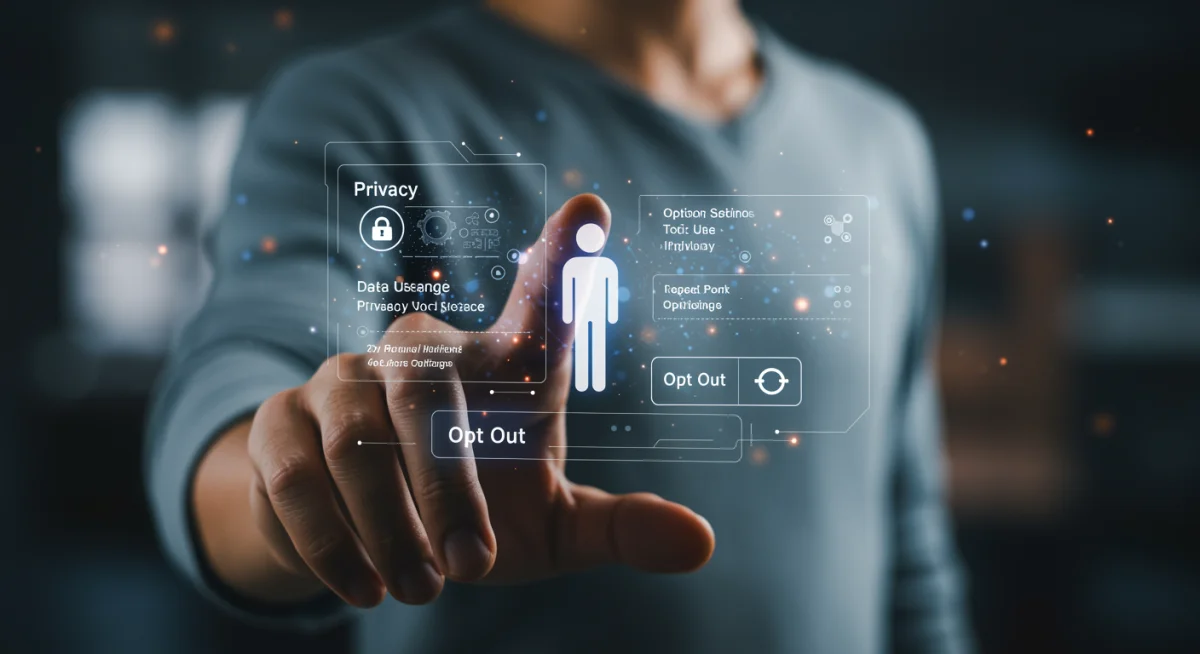
1. Proactive Platform-Specific Privacy Management
The first and most direct way to opt out is to diligently manage your privacy settings on every platform and service you use. This goes beyond simply accepting default settings. It involves diving deep into the privacy dashboards of social media sites, email providers, search engines, and even your smartphone’s operating system.
Many platforms now offer more granular controls than ever before, allowing you to specify what data can be collected, how it can be used, and with whom it can be shared. Regularly reviewing and updating these settings is crucial, as platforms frequently update their policies and introduce new data collection features. This method empowers you to directly influence your data’s journey at its source.
- Review Social Media Settings: Limit data sharing with third-party apps, control ad personalization, and manage audience for your posts.
- Adjust Browser Privacy: Use privacy-focused browsers, install ad-blockers and tracking prevention extensions, and regularly clear cookies.
- Configure Device Permissions: Restrict app access to location, microphone, camera, and contacts unless absolutely necessary.
- Opt-Out of Email Tracking: Utilize email services or browser extensions that block tracking pixels in emails.
By taking a hands-on approach to your platform settings, you can significantly reduce the amount of data flowing into the broader data economy. This method requires consistent effort but offers immediate returns in terms of enhanced privacy and a more controlled digital experience.
2. Utilizing Data Deletion and Data Broker Opt-Out Services
The second powerful strategy involves actively requesting data deletion and utilizing specialized services to opt out from data brokers. While managing platform settings addresses data collection at the point of interaction, data deletion and broker opt-outs tackle the historical data that has already been collected and disseminated.
Many jurisdictions, particularly with regulations like CCPA in the US, grant individuals the right to request that companies delete their personal data. Furthermore, several services and organizations specialize in helping you identify and remove your information from data broker databases. This is a more comprehensive approach to cleaning up your digital footprint beyond the immediate platforms you use.
- Submit Data Deletion Requests: Exercise your ‘right to be forgotten’ with companies under relevant privacy laws.
- Use Data Broker Opt-Out Tools: Employ services that identify where your data is and submit opt-out requests on your behalf.
- Regularly Check for Your Data: Periodically search for your personal information (e.g., name, address) on people-finder sites and request removal.
- Consider Privacy-Focused Services: Switch to email, search engine, and communication platforms that prioritize user privacy by design.
This method requires patience and persistence, as the process of removing data from various brokers can be time-consuming. However, it is an essential step for those looking to significantly reduce their exposure and protect their privacy from the more insidious aspects of the data economy 2026.
The Future of Data Privacy and Your Role in 2026
As we navigate the complexities of the data economy 2026, the landscape of data privacy continues to evolve. Technological advancements, new legislative efforts, and shifting societal norms will undoubtedly shape how personal information is collected, used, and protected. Your role as an informed and proactive digital citizen becomes increasingly vital in this ongoing dialogue.
The future may bring more sophisticated privacy-enhancing technologies, such as federated learning or homomorphic encryption, which allow data analysis without directly exposing raw personal information. However, these innovations will only be effective if accompanied by strong legal frameworks and a collective commitment to ethical data practices.
Emerging Privacy Technologies and Regulations
The development of privacy-preserving technologies is gaining momentum. These include techniques that allow companies to derive insights from data without ever accessing the individual identifiers, offering a promising path towards balancing innovation with privacy. Simultaneously, governments worldwide are continuing to refine and expand data protection regulations, seeking to provide individuals with more robust rights and control over their digital identities.
- Privacy-Enhancing Technologies (PETs): Tools like differential privacy and secure multi-party computation aim to protect individual data points while enabling collective analysis.
- Global Privacy Standards: The increasing harmonization of privacy laws across different regions, creating a more consistent framework for data protection.
- Decentralized Identity: Technologies that give individuals more control over their digital identities and how they are presented to services.
These emerging trends suggest a future where individuals might have more inherent control over their data, moving beyond the current reactive opt-out mechanisms to proactive, privacy-by-design systems. However, the adoption and effectiveness of these will depend on broad industry commitment and continued public advocacy.
| Key Point | Brief Description |
|---|---|
| Data’s Value in 2026 | Personal data is a primary commodity, driving targeted services, advertising, and predictive analytics across industries. |
| Data Broker Impact | Hidden entities aggregate vast personal profiles, influencing everything from marketing to financial decisions without direct consent. |
| Proactive Privacy | Regularly adjust platform-specific privacy settings to limit data collection and sharing at the source. |
| Data Deletion Rights | Utilize legal rights and services to request deletion of personal data from companies and data brokers. |
Frequently Asked Questions About Data Privacy in 2026
The 2026 data economy refers to the complex ecosystem where personal information is collected, processed, and exchanged as a valuable asset. It underpins targeted services, advertising, and various business models, constantly adapting to new technologies and user behaviors.
Companies analyze your online activities, purchases, location, and demographics to create detailed profiles. These profiles enable them to deliver highly personalized advertisements and content directly relevant to your presumed interests, increasing engagement and sales.
Data brokers collect and aggregate personal information from public records, commercial transactions, and online activities. They create comprehensive profiles, often without your direct knowledge, and sell them to third parties for various purposes like marketing and risk assessment.
The ‘right to be forgotten’ allows individuals, under certain privacy laws like CCPA, to request that companies delete their personal data. You can exercise this right by contacting organizations directly or utilizing specialized services that assist with data deletion requests.
AI presents both challenges and opportunities for data privacy. While it can enhance data collection and analysis, advancements in privacy-enhancing technologies (PETs) like federated learning could allow data processing with stronger anonymity, potentially improving privacy if widely adopted and regulated effectively.
Conclusion
The data economy 2026 represents a monumental shift in how personal information is valued and utilized. While it drives innovation and convenience, it also necessitates a heightened awareness of our digital footprints. Understanding the intricate ways your data is used by tech companies, data brokers, and governments is the first step toward reclaiming your privacy. By proactively managing platform settings and diligently utilizing data deletion and opt-out services, you can significantly reduce your exposure and exert greater control over your digital identity. The journey to digital privacy is ongoing, requiring continuous vigilance and engagement, but it is an essential endeavor in an increasingly data-driven world.