Federal Disaster Relief Programs 2026: Your Recovery Guide
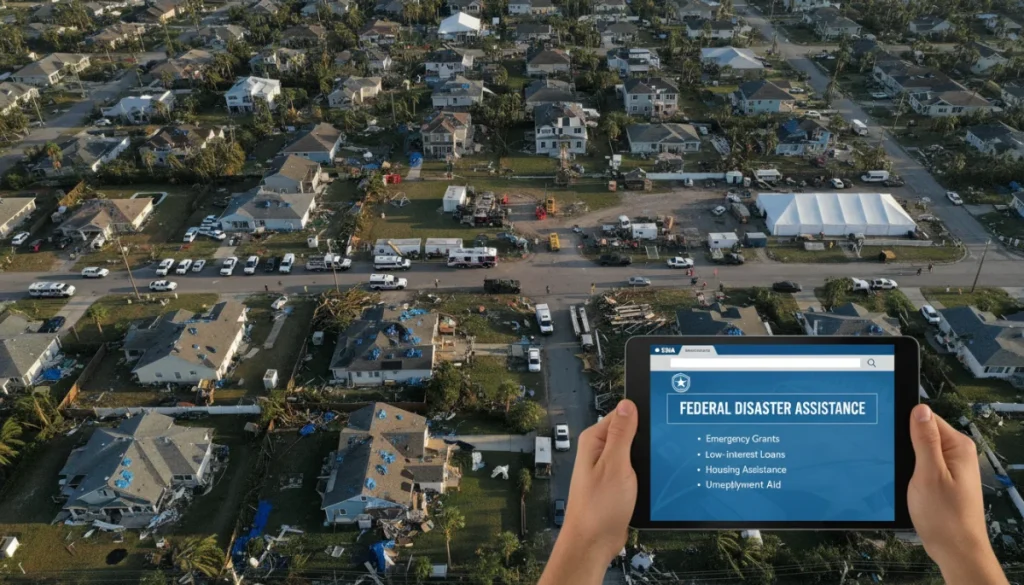
Understanding federal disaster relief programs in 2026 is crucial for effective recovery, as various aid packages cater to different needs post-disaster.
When disaster strikes, the path to recovery can feel overwhelming. Navigating the complex landscape of federal assistance is often one of the first, and most critical, steps. This guide to federal disaster relief programs in 2026 aims to demystify the options available, helping individuals, businesses, and communities understand which aid package is right for their unique recovery journey.
Understanding the Federal Disaster Declaration Process
Before any federal aid can be distributed, a formal disaster declaration is typically required. This pivotal step officially recognizes that an event’s severity exceeds the capabilities of state and local governments, thus triggering federal assistance. Understanding this process is the bedrock upon which all subsequent relief efforts are built.
The process usually begins with local emergency managers assessing damage and requesting assistance from their state. If the governor determines that state resources are insufficient, they will then submit a request to the President through the Federal Emergency Management Agency (FEMA). The President, upon reviewing FEMA’s findings, can issue either an Emergency Declaration or a Major Disaster Declaration.
Types of Federal Declarations
- Emergency Declaration: This declaration is more limited in scope and typically provides federal assistance for emergency protective measures and hazard mitigation. It focuses on saving lives and protecting property.
- Major Disaster Declaration: This declaration is broader and provides a wider range of federal assistance, including both individual assistance (for people and households) and public assistance (for state, tribal, and local governments, and certain private nonprofit organizations).
Once a declaration is made, specific counties or jurisdictions are designated for aid. This means that even if a state receives a declaration, not all areas within that state may be eligible for every type of federal assistance. Residents and businesses in affected areas must stay informed about these designations to determine their eligibility for various programs.
In essence, the federal disaster declaration is the gateway to unlocking critical resources. It sets the stage for FEMA, the Small Business Administration (SBA), and other agencies to deploy their programs, providing a structured framework for recovery efforts across the nation.
FEMA Individual and Households Program (IHP): Direct Aid for Survivors
The FEMA Individual and Households Program (IHP) is often the first line of direct assistance for survivors of federally declared disasters. Designed to help individuals and families with essential needs that cannot be met through insurance or other forms of assistance, IHP provides financial and direct services. This program is crucial for those facing immediate housing and personal property losses.
IHP assistance can include funds for temporary housing, home repairs, and replacement of essential personal property. It’s not intended to restore property to its pre-disaster condition but rather to make it safe, sanitary, and functional. Eligibility is determined on a case-by-case basis, considering factors like insurance coverage, income, and the severity of damages.
Key Components of IHP Assistance
- Housing Assistance: This can cover rental assistance for temporary housing, lodging expenses, and financial assistance for home repair or replacement if the home is uninhabitable.
- Other Needs Assistance (ONA): ONA addresses other critical expenses and serious needs caused by the disaster. This might include medical and dental expenses, funeral and burial costs, childcare, moving and storage expenses, and critical household items.
- Direct Assistance: In some cases, FEMA may provide direct services, such as temporary housing units, when suitable housing is unavailable or when the survivor has specific accessibility needs.
Applying for IHP assistance typically involves registering with FEMA, either online, by phone, or in person at a Disaster Recovery Center (DRC). Applicants will need to provide personal information, details about their damages, and insurance information. It is vital to apply as soon as possible after a disaster declaration, as there are usually deadlines for registration.
The IHP plays a vital role in helping disaster survivors get back on their feet by providing essential support for basic needs. While it doesn’t cover all losses, it offers a critical safety net that allows individuals and families to begin their recovery journey.
Small Business Administration (SBA) Disaster Loans: Economic Recovery
Beyond individual assistance, economic recovery is paramount for communities hit by disaster. The U.S. Small Business Administration (SBA) offers low-interest disaster loans to businesses, private non-profit organizations, homeowners, and renters. These loans are designed to help repair or replace disaster-damaged property and cover economic losses, playing a crucial role in stabilizing affected economies.
SBA disaster loans are not just for businesses. Homeowners can apply for loans to repair or replace their primary residence and personal property, while renters can apply for loans to replace personal property. For businesses, these loans can cover physical damage to real estate, machinery, equipment, fixtures, inventory, and other assets. Additionally, Economic Injury Disaster Loans (EIDL) are available to help small businesses and private non-profit organizations meet working capital needs caused by the disaster, even if they didn’t suffer physical damage.
Types of SBA Disaster Loans
- Home and Personal Property Loans: For homeowners and renters to repair or replace disaster-damaged real estate and personal property.
- Business Physical Disaster Loans: For businesses to repair or replace disaster-damaged real estate, machinery, equipment, fixtures, inventory, and leasehold improvements.
- Economic Injury Disaster Loans (EIDL): For small businesses and private non-profit organizations to help meet working capital needs caused by the disaster, regardless of physical damage.
Applying for an SBA disaster loan often begins with registering with FEMA. If referred to the SBA, applicants will complete a loan application package. It’s important to understand that these are loans, not grants, and must be repaid. However, they offer favorable terms, including low interest rates and long repayment periods, making them an accessible option for long-term recovery.
The SBA’s disaster loan programs are a cornerstone of post-disaster economic revitalization. By providing affordable capital, they enable businesses to reopen, homeowners to rebuild, and communities to regain their economic footing, fostering resilience in the face of adversity.
Public Assistance Program (PAP): Rebuilding Community Infrastructure
While IHP and SBA loans focus on individuals and businesses, the FEMA Public Assistance Program (PAP) is designed to help state, tribal, and local governments, as well as certain private non-profit organizations. This program provides funding for emergency protective measures, debris removal, and the repair or replacement of disaster-damaged public facilities. It is fundamental for restoring essential community services and infrastructure.
PAP covers a wide range of public infrastructure, from roads and bridges to public utilities, schools, and hospitals. The program operates on a cost-sharing basis, with FEMA typically reimbursing at least 75% of eligible costs, while the remaining 25% is covered by state and local governments. This partnership ensures that communities have the financial resources to undertake large-scale rebuilding efforts.
Categories of PAP Assistance
- Category A: Debris Removal: Funding for clearing debris from public and private property.
- Category B: Emergency Protective Measures: Actions taken to save lives, protect public health and safety, and protect improved public and private property.
- Category C-G: Permanent Work: Restoration of damaged public facilities, including roads and bridges (C), water control facilities (D), public buildings and contents (E), public utilities (F), and parks, recreational, and other facilities (G).
The application process for PAP involves a series of steps, including preliminary damage assessments, requests for public assistance, and detailed project worksheets. Eligible applicants work closely with FEMA and state emergency management agencies to identify damages, scope out necessary repairs, and document costs. The program emphasizes cost-effectiveness and hazard mitigation to build back stronger and more resilient infrastructure.
The Public Assistance Program is critical for ensuring that communities can recover their essential services and infrastructure after a disaster. By supporting the rebuilding of public assets, PAP helps restore normalcy, promotes economic recovery, and enhances the overall resilience of affected regions.
Hazard Mitigation Grant Program (HMGP): Building Resilience
Beyond immediate recovery, preventing future disaster losses is a key objective of federal relief efforts. The Hazard Mitigation Grant Program (HMGP), administered by FEMA, provides funding to state, tribal, and local governments to implement long-term hazard mitigation measures after a major disaster declaration. The goal is to reduce the risk to life and property from future natural hazards, moving beyond simply rebuilding to building back better.
HMGP funds a wide array of projects, from retrofitting structures to withstand earthquakes or floods, to elevating homes in flood-prone areas, acquiring and demolishing properties in high-risk zones, and developing early warning systems. The program is proactive, aiming to break the cycle of disaster damage, reconstruction, and repeated damage. It encourages communities to adopt and enforce up-to-date building codes and land-use planning that account for local hazards.
Examples of HMGP Projects
- Property Acquisition and Relocation: Purchasing properties in high-risk areas and relocating residents to safer ground.
- Elevation: Raising structures above flood levels to prevent future water damage.
- Retrofitting: Strengthening existing buildings against wind, seismic, or flood forces.
- Drainage Improvements: Modifying drainage systems to reduce flood impacts.
- Community Planning: Developing or updating comprehensive plans that integrate hazard mitigation strategies.
Funding for HMGP becomes available after a presidential major disaster declaration. State and local governments apply for these grants, which typically require a 75% federal share and a 25% non-federal share (often provided by state or local funds). Projects are prioritized based on their cost-effectiveness and their ability to significantly reduce future risks.
The HMGP is a cornerstone of national resilience efforts. By investing in mitigation, communities can reduce their vulnerability to future disasters, save lives, prevent property damage, and lessen the financial burden of repeated recovery efforts. It shifts the focus from reactive response to proactive risk reduction, fostering a more sustainable approach to living with natural hazards.
Comparing Federal Aid Packages: Which One is Right for You?
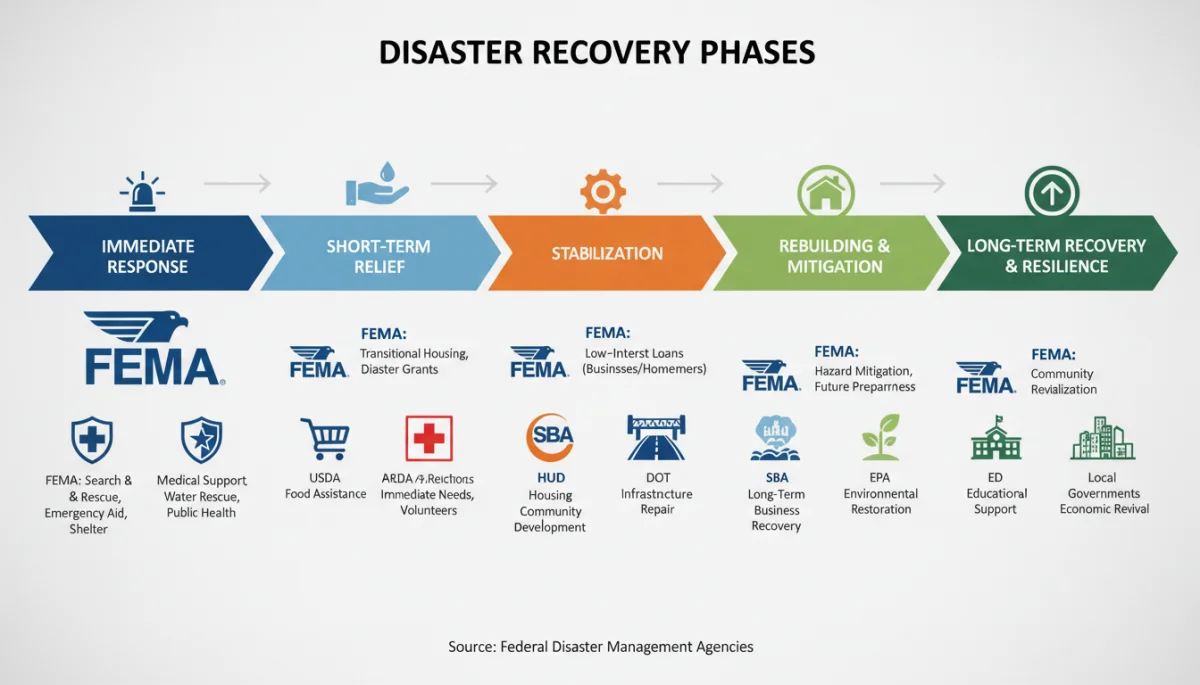
Navigating the various federal disaster relief programs can be complex, as each serves a distinct purpose and has specific eligibility criteria. The key to successful recovery lies in understanding which package aligns best with your needs, whether you are an individual, a business owner, or a government entity. Making an informed decision requires evaluating the nature of your losses and your capacity for recovery.
For individuals and families, the first stop is usually FEMA’s Individual and Households Program (IHP). This program addresses immediate needs like temporary housing, home repairs, and essential personal property replacement. It’s crucial for those whose primary residence has been damaged and who lack sufficient insurance or other resources.
Businesses, homeowners, and renters seeking financial assistance for property damage or economic injury should look to the Small Business Administration (SBA) Disaster Loans. These low-interest loans are versatile, covering physical damage to homes and businesses, as well as working capital needs for businesses experiencing economic disruption. Unlike FEMA grants, SBA loans must be repaid, but they offer attractive terms for long-term recovery.
For state, tribal, and local governments, as well as certain private non-profits, FEMA’s Public Assistance Program (PAP) is the primary avenue for rebuilding damaged infrastructure and covering emergency response costs. This program is vital for restoring essential community services and public facilities like roads, bridges, and schools.
Finally, for long-term community resilience and preventing future losses, the Hazard Mitigation Grant Program (HMGP) offers funding for projects that reduce risks from natural hazards. This program is for governmental entities and aims to build safer, more sustainable communities over time.
Often, individuals and entities may be eligible for assistance from multiple programs. For example, a homeowner might receive a small grant from FEMA for immediate needs and then apply for an SBA loan for more extensive repairs. The best approach is to register with FEMA first, as this often serves as the gateway to other federal relief programs and allows various agencies to coordinate their support.
Understanding these distinct roles and how they intersect is paramount. Each program fills a critical gap in the comprehensive federal response, ensuring a layered approach to recovery that addresses immediate needs, economic stability, infrastructure rebuilding, and future resilience.
| Program | Primary Focus |
|---|---|
| FEMA IHP | Direct financial aid for individuals/households (housing, essential needs). |
| SBA Disaster Loans | Low-interest loans for businesses, homeowners, renters (physical damage, economic injury). |
| FEMA PAP | Reimbursement for state/local governments, non-profits (infrastructure, emergency response). |
| FEMA HMGP | Grants for long-term hazard mitigation projects (risk reduction, resilience). |
Frequently Asked Questions About Disaster Relief
The first step is usually to register with FEMA. This can be done online at DisasterAssistance.gov, via the FEMA app, or by calling the FEMA helpline. You will need personal information, details about your damages, and insurance information to complete the registration.
A grant, like some FEMA assistance, does not need to be repaid. A loan, such as those from the SBA, is money that must be repaid, typically with interest, over a set period. Understanding this distinction is crucial for financial planning during recovery.
Yes, it is common for survivors to receive assistance from both FEMA and the SBA. FEMA may provide initial grants for immediate needs, while the SBA offers low-interest loans for more extensive repairs or economic losses. These programs are designed to complement each other.
Federal disaster assistance typically aims to cover needs not met by insurance. You must first file a claim with your insurance company. If your insurance does not cover all damages or delays payment, federal aid may be available to fill those gaps.
The timeline varies depending on the type of assistance and the volume of applications. FEMA aims to process applications quickly, with some aid potentially available within days for urgent needs. SBA loan processing can take longer due to the detailed financial review required.
Conclusion
Navigating the aftermath of a disaster is a challenging journey, but understanding the array of federal disaster relief programs available in 2026 can significantly ease the burden. From FEMA’s direct aid for individuals to SBA’s economic recovery loans, and from public assistance for infrastructure to grants for future mitigation, each program plays a vital role in fostering comprehensive recovery and building resilience. By familiarizing yourself with these options and understanding how they interlink, you can make informed decisions that pave the way for a more effective and robust recovery for yourself, your business, or your community.