E-commerce in 2026: Key Changes Affecting Online Shopping Today
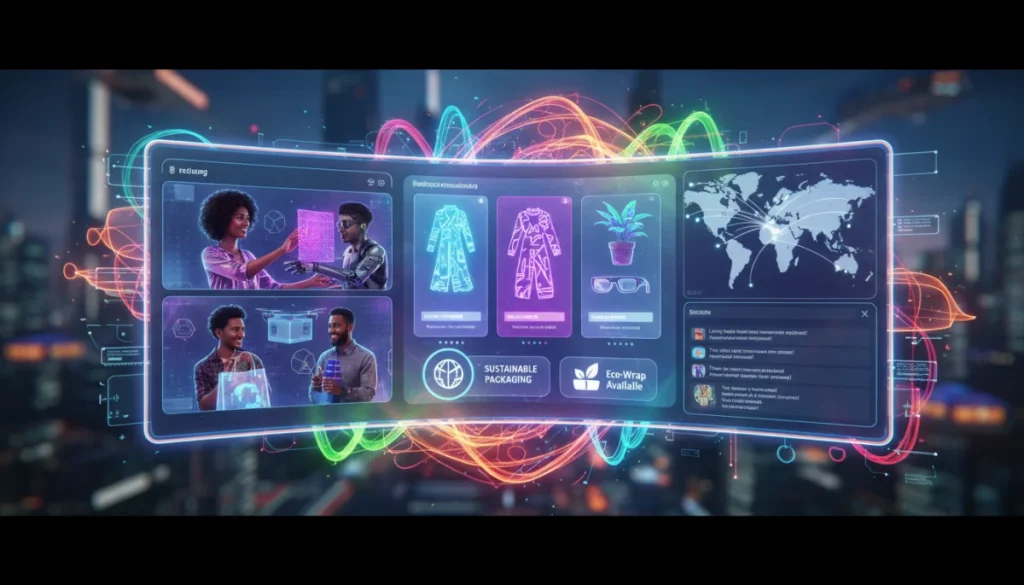
E-commerce in 2026 is being reshaped by hyper-personalization driven by AI and a significant push towards sustainable and ethical consumption.
As we navigate through 2026, the landscape of online retail continues its rapid evolution. Understanding the two pivotal changes affecting online shopping experiences today is crucial for consumers and businesses alike. The future of transactions, interactions, and consumer expectations is already here, driven by technological advancements and shifting societal values.
The rise of hyper-personalization through advanced AI
The days of generic product recommendations are quickly fading. In 2026, e-commerce 2026 changes are profoundly influenced by hyper-personalization, a sophisticated approach driven by advanced artificial intelligence. This isn’t just about suggesting items you might like based on past purchases; it’s about anticipating your needs, understanding your context, and tailoring every aspect of your shopping journey.
AI algorithms now analyze vast datasets, including browsing history, purchase patterns, social media activity, and even real-time behavioral cues. This deep understanding allows platforms to create incredibly precise user profiles, leading to highly relevant product displays, customized promotions, and even dynamic pricing tailored to individual preferences and willingness to pay.
Predictive analytics and proactive recommendations
One of the most significant advancements lies in predictive analytics. E-commerce platforms no longer wait for you to search; they predict what you might need before you even realize it. This proactive approach saves time and enhances convenience, making the shopping experience feel almost intuitive.
- Anticipatory shipping: Products are dispatched to local hubs before you click ‘buy’.
- Contextual suggestions: Recommendations adapt based on time of day, location, or even weather.
- Lifecycle personalization: Offers align with life events like birthdays, anniversaries, or moving.
AI-powered virtual assistants and conversational commerce
Virtual assistants are no longer basic chatbots. They are sophisticated AI entities capable of natural language processing, understanding complex queries, and offering personalized advice. This elevates conversational commerce, turning a transactional interaction into a more engaging and human-like dialogue.
These assistants can guide shoppers through product selections, compare specifications, answer detailed questions, and even facilitate purchases without ever leaving the chat interface. This seamless interaction reduces friction and builds trust, making the shopping process feel effortless and highly efficient.
The integration of advanced AI into every facet of the online shopping experience means that consumers receive a highly curated and efficient journey. This isn’t just about convenience; it’s about creating a sense of being understood and valued by the retailer, fostering loyalty in an increasingly competitive market.
The imperative of sustainability and ethical consumption
Beyond technological advancements, a profound shift in consumer values is driving another key change in e-commerce for 2026: the undeniable demand for sustainability and ethical practices. Consumers are increasingly conscious of their environmental footprint and the social impact of their purchases, pushing retailers to adopt more transparent and responsible operations.
This isn’t a niche trend; it’s a mainstream expectation. Brands that fail to demonstrate a commitment to sustainability risk losing significant market share, especially among younger demographics. Shoppers are actively seeking out products with clear eco-credentials, ethical sourcing, and transparent supply chains.
Transparent supply chains and eco-friendly packaging
Consumers want to know where their products come from, how they are made, and what impact they have on the planet. E-commerce platforms are responding by providing detailed information about product origins, manufacturing processes, and the environmental certifications of their goods.
- Biodegradable packaging: Minimizing plastic and embracing compostable materials.
- Carbon footprint labeling: Clear indicators of a product’s environmental impact.
- Ethical sourcing verification: Ensuring fair labor practices and responsible resource extraction.
Circular economy models and product longevity
The linear ‘take-make-dispose’ model is being challenged by the principles of the circular economy. E-commerce platforms are facilitating the resale, repair, and recycling of products, encouraging consumers to extend product lifespans and reduce waste. This includes offering repair services, buy-back programs, and marketplaces for pre-owned goods.
This shift not only benefits the environment but also resonates with consumers who are looking for value beyond initial purchase price, embracing durability and responsible consumption. Brands that offer robust warranties, repair options, or take-back programs build stronger customer relationships based on trust and shared values.
The push for sustainability and ethical consumption is transforming how products are sourced, packaged, and delivered. Retailers are realizing that environmental and social responsibility is not just a marketing ploy, but a fundamental aspect of their brand identity and long-term viability in the e-commerce space.
Enhanced reality experiences: AR and VR in shopping
Beyond personalization and sustainability, the integration of augmented reality (AR) and virtual reality (VR) is fundamentally transforming how consumers interact with products online. These immersive technologies are bridging the gap between digital browsing and the tangible experience of in-store shopping, reducing uncertainty and enhancing engagement.
In 2026, AR applications allow shoppers to virtually ‘try on’ clothes, visualize furniture in their homes, or test makeup shades with remarkable accuracy. VR experiences are taking this a step further, enabling virtual storefronts where consumers can walk through digital aisles, interact with 3D product models, and even consult with virtual sales associates in a fully immersive environment.
Augmented reality for practical visualization
AR is becoming a standard feature for many e-commerce apps, particularly in sectors like home decor, fashion, and beauty. The ability to see how a product will look in a personal space or on one’s own body eliminates much of the guesswork associated with online purchases, thereby decreasing return rates and increasing customer satisfaction.
This technology provides a tangible benefit, allowing for informed decisions without the need to physically visit a store. The convenience and accuracy offered by AR tools are making them indispensable for modern online shoppers who expect a richer, more interactive experience.
Virtual reality for immersive brand engagement
VR, while still emerging, offers an even deeper level of immersion. Brands are experimenting with virtual showrooms and interactive product demonstrations that transport consumers into a branded metaverse. This allows for a multi-sensory engagement that goes beyond simple product viewing, creating memorable and emotionally resonant shopping experiences.
From exploring a car’s interior to experiencing a travel destination, VR is setting new benchmarks for how products and services can be presented online. These immersive environments foster a stronger connection between the consumer and the brand, building loyalty through innovative engagement.
The blending of the physical and digital through AR and VR is making online shopping more interactive, informative, and enjoyable. These technologies are not just gimmicks; they are powerful tools that enhance decision-making and create unforgettable brand interactions.

The evolution of payment systems and security
The convenience and security of online transactions are paramount, and in 2026, payment systems in e-commerce have undergone significant advancements. The focus is on seamless, secure, and diverse payment options that cater to a global audience while mitigating fraud risks effectively. Cryptocurrencies, biometric authentication, and ‘buy now, pay later’ (BNPL) schemes are now commonplace.
Consumers expect frictionless checkout processes that are also robustly protected. This dual demand has spurred innovations in encryption, tokenization, and multi-factor authentication, ensuring that financial data remains secure even as transaction speeds increase. The integration of various payment methods also reflects a growing understanding of diverse consumer preferences and financial situations.
Biometric authentication and tokenization
Fingerprint and facial recognition are increasingly used for authenticating online purchases, offering a higher level of security and convenience than traditional passwords. This reduces the risk of credential theft and streamlines the checkout process significantly.
- Enhanced security: Biometrics are harder to compromise than passwords.
- Faster checkout: Eliminates manual entry of payment details.
- Fraud reduction: Real-time verification minimizes unauthorized transactions.
The rise of ‘buy now, pay later’ (BNPL) options
BNPL services have become a standard offering, allowing consumers greater financial flexibility. This payment model enables shoppers to receive products immediately and pay in installments, often interest-free, making higher-value items more accessible. While beneficial, responsible lending practices remain a key consideration.
This flexibility has democratized access to products and services for a broader demographic, boosting conversion rates for retailers. However, the prevalence of BNPL also necessitates clear communication of terms and conditions to prevent consumer debt issues.
The continuous evolution of payment systems ensures that e-commerce remains a secure and accessible platform for transactions. Innovations in security and flexible payment options are crucial for maintaining consumer trust and driving the sustained growth of online retail.
Supply chain resilience and localized fulfillment
Recent global events have highlighted the vulnerabilities of complex, global supply chains, leading to a significant shift towards resilience and localized fulfillment in e-commerce for 2026. Retailers are investing in diversified sourcing, regional warehousing, and advanced logistics to ensure faster, more reliable delivery and mitigate disruptions.
The goal is to reduce reliance on single points of failure and bring inventory closer to the consumer. This not only speeds up delivery times but also reduces shipping costs and environmental impact, aligning with the growing demand for sustainable practices. Localized fulfillment networks are becoming a competitive advantage.
Micro-fulfillment centers and last-mile delivery innovation
To achieve rapid delivery, especially in urban areas, micro-fulfillment centers are gaining prominence. These smaller, automated warehouses are strategically located closer to customers, enabling same-day or even hourly delivery options. Innovations in last-mile delivery, including drone and autonomous vehicle trials, are also becoming more common.
- Reduced delivery times: Proximity to customers allows for ultra-fast shipping.
- Operational efficiency: Automation minimizes labor costs and errors.
- Environmental benefits: Shorter delivery routes mean lower carbon emissions.
Diversified sourcing and regional manufacturing
To build resilience, companies are moving away from single-country sourcing models. Diversifying suppliers across multiple regions helps buffer against geopolitical issues, natural disasters, or pandemics. There’s also a renewed interest in regional manufacturing to shorten supply chains and support local economies.
This strategic shift minimizes risks and creates a more robust supply network. While it might involve initial investment, the long-term benefits of stability and reduced vulnerability outweigh the costs, ensuring consistent product availability for consumers.
The focus on supply chain resilience and localized fulfillment is a direct response to global uncertainties. By prioritizing robust logistics and diversified operations, e-commerce businesses are better equipped to meet consumer demands for speed and reliability, while also contributing to more sustainable practices.
The social commerce revolution and community building
Social commerce, the integration of e-commerce functionalities directly within social media platforms, has exploded in 2026, transforming how consumers discover and purchase products. It’s no longer just about seeing an ad; it’s about seamless shopping experiences embedded within the social interactions and communities consumers are already part of. This trend leverages the power of influencer marketing, peer recommendations, and live shopping events to drive sales.
This approach harnesses the trust and engagement built within social networks, making the purchasing journey feel more natural and less intrusive. Brands are actively cultivating online communities, turning customers into advocates and creating a more dynamic, interactive shopping environment.
In-app shopping and influencer collaborations
Major social media platforms now offer robust in-app shopping capabilities, allowing users to browse products, read reviews, and complete purchases without leaving the application. This frictionless experience capitalizes on impulse buying and the immediacy of social media engagement.
Influencer collaborations play a crucial role, with trusted personalities showcasing products and driving traffic directly to in-app stores. Their authentic endorsements and direct engagement with followers significantly impact purchasing decisions, making social media a powerful sales channel.
Live shopping and interactive experiences
Live shopping events, where brands or influencers demonstrate products in real-time and interact with viewers, have become a staple of social commerce. These events create a sense of urgency and exclusivity, offering limited-time deals and answering questions directly from the audience.
The interactive nature of live shopping fosters a strong sense of community and direct engagement, mimicking the excitement of a physical shopping event but with the convenience of online access. This format is particularly effective for product launches and seasonal promotions, generating significant buzz and immediate sales.
Social commerce is fundamentally changing the discovery and purchase journey, making it more integrated, interactive, and community-driven. Brands that effectively leverage social platforms and foster genuine connections are seeing unprecedented engagement and sales growth.
| Key Change | Brief Description |
|---|---|
| Hyper-Personalization | AI-driven tailored experiences, predictive recommendations, and conversational commerce. |
| Sustainability & Ethics | Transparent supply chains, eco-friendly packaging, and circular economy models. |
| Enhanced Reality | AR and VR for immersive product visualization and virtual store experiences. |
| Social Commerce | In-app shopping, influencer collaborations, and live shopping events. |
Frequently asked questions about e-commerce in 2026
AI now enables hyper-personalization by analyzing vast data to predict consumer needs, offering proactive recommendations, and tailoring entire shopping journeys. This goes beyond basic suggestions to anticipate desires and provide highly relevant content and offers.
Sustainability is a core expectation for online shoppers in 2026. Consumers demand transparent supply chains, eco-friendly packaging, and ethical sourcing. Brands must demonstrate commitment to environmental and social responsibility to maintain relevance and trust.
Yes, AR and VR are becoming increasingly common. AR allows virtual try-ons and product visualization in real environments, while VR offers immersive virtual storefronts. These technologies bridge the physical-digital gap, enhancing engagement and reducing purchase uncertainty for shoppers.
Payment systems are focusing on security, speed, and flexibility. Biometric authentication offers enhanced security, while ‘buy now, pay later’ (BNPL) options provide financial flexibility. The goal is a seamless, secure, and diverse range of payment methods for all online shoppers.
Social commerce integrates shopping directly into social media platforms, leveraging influencer marketing, peer recommendations, and live shopping events. It’s crucial because it capitalizes on existing social engagement, making the purchase journey more natural, interactive, and community-driven.
Conclusion
The e-commerce landscape in 2026 is undergoing a dynamic transformation, driven by two fundamental shifts: the relentless pursuit of hyper-personalization through advanced AI and the pervasive demand for sustainability and ethical consumption. These changes are not isolated; they intersect and influence each other, pushing online retailers to innovate across all facets of their operations. From immersive AR/VR experiences and secure, flexible payment systems to resilient supply chains and the rise of social commerce, the future of online shopping is about creating more intelligent, responsible, and engaging interactions. For businesses, adapting to these trends is no longer optional; it’s essential for survival and growth in a rapidly evolving digital marketplace.