Declutter Your Mind: Achieve Clarity & Focus in 2026

Implementing four actionable steps can effectively help you declutter your mind: 4 steps to mental clarity and focus in 2026, leading to enhanced productivity and inner peace.
Are you ready to truly declutter your mind: 4 steps to mental clarity and focus in 2026 and unlock your full potential? In a world brimming with constant distractions, achieving mental clarity and unwavering focus can seem like an elusive dream. This article offers a practical roadmap to navigate the noise, providing actionable strategies to help you cultivate a more organized and serene mental landscape.
Understanding the Clutter: Identifying Your Mental Overload
Before we can effectively declutter, we must first understand what constitutes mental clutter. It’s not just about having too many thoughts; it’s about the quality and organization of those thoughts. Mental overload often manifests as a constant hum of worries, unaddressed tasks, and an inability to concentrate on a single item. Recognizing these signs is the crucial first step toward reclaiming your mental space.
Common Sources of Mental Clutter
Many factors contribute to a cluttered mind, ranging from external pressures to internal habits. Identifying these sources allows for targeted interventions, making the decluttering process more efficient and sustainable. Understanding these triggers is essential for developing robust strategies.
- Information Overload: Constant exposure to news, social media, and digital content can overwhelm our cognitive capacity, making it difficult to process and retain important information.
- Unresolved Tasks and Decisions: A backlog of unfinished tasks or pending decisions creates mental residue, occupying valuable mental bandwidth even when not actively being addressed.
- Negative Self-Talk and Worries: Repetitive negative thought patterns or chronic worrying can consume significant mental energy, diminishing focus and emotional well-being.
- Lack of Boundaries: Poor boundaries in work, personal life, or digital interactions can lead to constant interruptions and a blurring of mental spaces, making concentration difficult.
By pinpointing the specific elements that contribute to your mental clutter, you gain a clearer picture of the challenges ahead. This self-awareness is empowering, as it transforms vague feelings of overwhelm into concrete problems that can be systematically addressed. The journey to mental clarity begins with this honest assessment.
Step 1: The Digital Detox – Reclaiming Your Online Space
In 2026, a significant portion of mental clutter originates from our digital lives. Constant notifications, endless scrolling, and the pressure to be constantly connected can fragment our attention and leave us feeling drained. A digital detox isn’t about abandoning technology entirely, but rather about consciously managing its presence in your life to serve you, not distract you.
Strategies for a Healthier Digital Environment
Creating a healthier digital environment involves setting clear boundaries and intentionally designing your online interactions. This proactive approach helps minimize digital distractions and frees up mental energy for more meaningful activities. It’s about quality over quantity in your digital consumption.
- Notification Management: Turn off non-essential notifications on your phone and computer. Designate specific times to check emails and messages rather than reacting instantly.
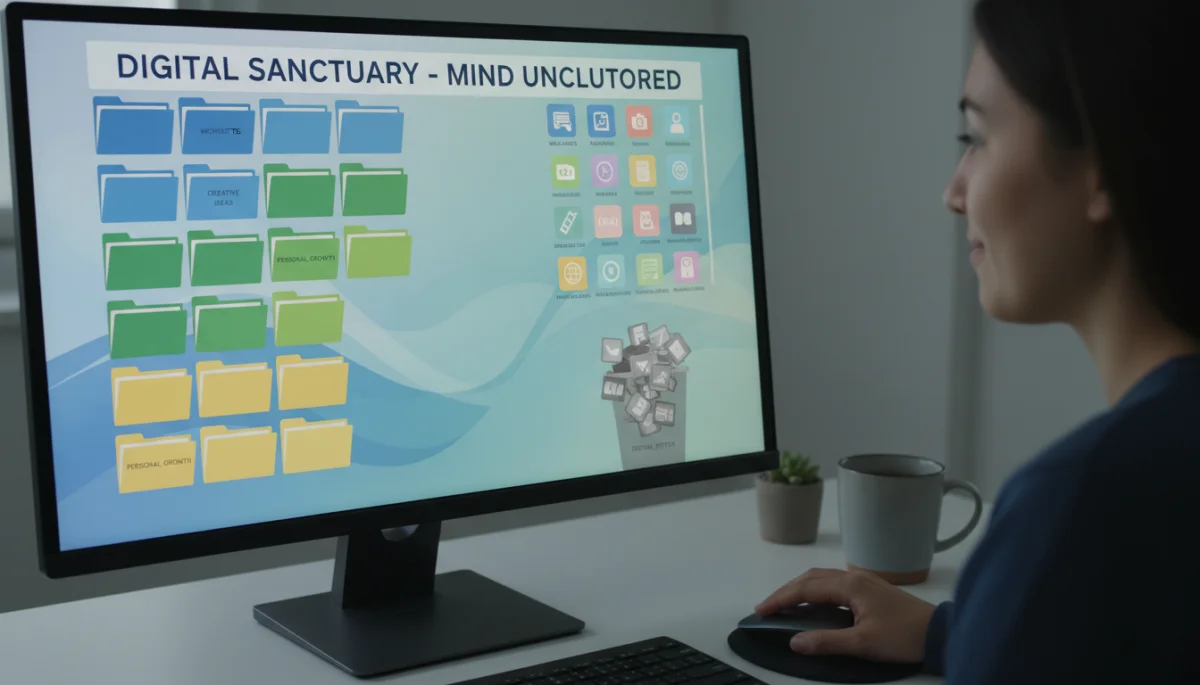
- App Audits: Regularly review and delete unused apps. Organize essential apps into folders to reduce visual clutter and make your digital workspace more efficient.
- Scheduled Screen Time: Set specific times for social media and entertainment. Avoid using devices during meals, before bed, or immediately after waking up to create mental separation.
- Mindful Consumption: Be intentional about the content you consume. Prioritize information that is enriching, inspiring, or directly relevant to your goals, rather than passively scrolling through feeds.
Implementing a digital detox allows you to regain control over your attention, reducing the constant pull of external stimuli. This deliberate disconnection creates space for introspection, deeper thought, and a greater capacity for focus. It’s a foundational step in creating a less cluttered mind.
Step 2: Mindful Scheduling – Prioritizing and Planning with Purpose
A cluttered mind often stems from an unstructured life, where tasks and commitments pile up without a clear roadmap. Mindful scheduling isn’t just about filling your calendar; it’s about intentionally allocating your time and energy to activities that align with your values and goals. This approach helps reduce decision fatigue and the anxiety of an overflowing to-do list.
Techniques for Effective Time Management
Effective time management is a cornerstone of mental clarity. By mastering how you allocate your time, you reduce the mental burden of unaddressed tasks and gain a sense of control over your day. These techniques help you move from reactive to proactive scheduling.
- Themed Days or Blocks: Dedicate specific days or blocks of time to certain types of tasks (e.g., “Deep Work Monday,” “Administrative Friday”). This minimizes context switching and allows for deeper focus on related activities.
- Prioritization Matrix: Use a matrix (e.g., Eisenhower Matrix: Urgent/Important) to categorize tasks, ensuring that high-impact activities receive your primary attention. This prevents less critical tasks from consuming valuable mental energy.
- Time Blocking: Schedule specific blocks of time for focused work, meetings, and even breaks. Treat these blocks as non-negotiable appointments to protect your attention and ensure progress on key objectives.
- Review and Adapt: Regularly review your schedule to see what worked and what didn’t. Be flexible and willing to adjust your approach as your priorities evolve, fostering a dynamic and responsive system.
By adopting mindful scheduling, you transform your daily routine from a reactive scramble into a purposeful progression. This clarity in planning directly translates to a less cluttered mind, as you’re no longer constantly worrying about what you might be forgetting or what you should be doing next. It’s about intentional living.
Step 3: The Art of Saying No – Setting Healthy Boundaries for Mental Peace
One of the most significant contributors to mental clutter is the inability to say no. Overcommitting, taking on too many responsibilities, or constantly trying to please others can lead to burnout and a fragmented sense of self. Learning the art of saying no is not about being unhelpful; it’s about protecting your mental resources and ensuring you have the capacity for what truly matters.
Cultivating Assertiveness and Self-Preservation
Setting healthy boundaries requires assertiveness and a clear understanding of your own limits. This skill is vital for maintaining mental peace and preventing external demands from overwhelming your internal landscape. It’s an act of self-preservation that benefits both you and those around you.
- Identify Your Limits: Understand your energy levels, time constraints, and emotional capacity. Knowing your boundaries makes it easier to recognize when to decline additional commitments.
- Practice Polite Refusals: Learn to say no gracefully and firmly. You don’t always need a lengthy explanation; a simple, “I appreciate the offer, but I’m unable to take that on right now,” is often sufficient.
- Offer Alternatives (Optional): If appropriate, you can suggest an alternative solution or recommend someone else who might be able to help. This shows willingness without overcommitting yourself.
- Prioritize Your Well-being: Remember that saying no to an external request is often saying yes to your own mental health, focus, and priorities. This shift in perspective can make boundary setting easier.
Mastering the art of saying no is a powerful tool for mental decluttering. It allows you to protect your time and energy, creating the necessary space to focus on your own goals and well-being. This intentional boundary setting is fundamental for sustained mental clarity and inner peace.
Step 4: Mind-Clearing Practices – Integrating Mindfulness and Reflection
Even with digital detoxes, mindful scheduling, and healthy boundaries, our minds can still accumulate daily residue. This is where active mind-clearing practices come into play. Integrating mindfulness and regular reflection into your routine provides a dedicated space to process thoughts, release tension, and reinforce mental clarity. These practices are not luxuries but essential components of a well-maintained mind.
Daily Rituals for Mental Maintenance
Just as we maintain our physical spaces, our mental space benefits from regular upkeep. Incorporating these simple, yet powerful, rituals can significantly reduce mental clutter and enhance your ability to focus. Consistency is key to experiencing their full benefits.
- Daily Meditation: Even 5-10 minutes of focused breathing or guided meditation can calm the nervous system, reduce mental chatter, and improve present-moment awareness.
- Journaling: Dedicate time to writing down your thoughts, worries, and insights. This externalizes internal dialogue, helping you process emotions and gain perspective without them swirling endlessly in your mind.
- Mindful Movement: Engage in activities like walking, yoga, or stretching with full awareness of your body and surroundings. This helps break cycles of rumination and brings you back to the present.
- Regular Nature Exposure: Spending time in nature has been shown to reduce stress, improve mood, and restore directed attention, offering a natural way to declutter the mind.
By consistently engaging in these mind-clearing practices, you actively train your brain to be less reactive and more intentional. This ongoing maintenance prevents mental clutter from accumulating, fostering a state of sustained clarity and focus. It’s an investment in your long-term mental well-being.
Sustaining Mental Clarity: Long-Term Strategies for a Focused Life
Achieving mental clarity and focus is not a one-time event but an ongoing journey. To truly embed these practices into your life and sustain the benefits, it’s essential to develop long-term strategies that support your mental well-being. This involves creating habits and systems that automatically promote a decluttered mind, even amidst life’s inevitable challenges.
Building Resilience and Adaptability
Life is dynamic, and so too must be our approach to mental health. Building resilience allows you to bounce back from setbacks, while adaptability ensures your strategies remain effective as circumstances change. These qualities are vital for maintaining a clear and focused mind over time.
- Regular Self-Assessment: Periodically check in with yourself to assess your mental state. Are you feeling overwhelmed again? What might be the cause? This self-awareness helps you course-correct before clutter becomes overwhelming.
- Learning to Delegate: Recognize that you don’t have to do everything yourself. Delegating tasks, both professionally and personally, can significantly reduce your mental load and free up energy for higher-priority items.
- Cultivating a Support System: Surround yourself with people who uplift you and understand your goals. A strong support network can provide encouragement, perspective, and practical help when you need it most.
- Embracing Imperfection: Understand that some mental clutter is inevitable. The goal isn’t to eliminate all distractions but to develop effective strategies for managing them and returning to a state of clarity quickly.
By integrating these long-term strategies, you create a robust framework for sustaining mental clarity and focus. This proactive approach ensures that the efforts you make today continue to yield benefits well into the future, allowing you to navigate 2026 and beyond with a sharp mind and a peaceful spirit.
The Future of Focus: Adapting to a Changing World in 2026
As we navigate 2026 and beyond, the landscape of information and demands on our attention will continue to evolve. To maintain mental clarity and focus, it’s not enough to simply apply static techniques; we must also cultivate an adaptable mindset, ready to integrate new strategies as technology and societal norms shift. The future of focus lies in our ability to be agile and intentional in managing our cognitive resources.
Proactive Adaptations for Evolving Challenges
The challenges to our attention are constantly changing, requiring us to be proactive in adapting our mental decluttering strategies. Staying informed and open to new approaches will be key to thriving in an increasingly complex world. This forward-thinking perspective ensures your mental well-being remains a priority.
- Exploring AI-Assisted Tools: Consider leveraging AI tools for task management, email filtering, or content summarization to reduce cognitive load and help prioritize information.
- Continuous Learning and Skill Development: Invest in learning new focus techniques or productivity methodologies. Staying current with best practices in mental wellness can offer fresh perspectives.
- Building Digital Resilience: Develop a conscious awareness of how emerging technologies impact your attention. Proactively set boundaries with new platforms or devices to prevent them from becoming sources of clutter.
- Fostering Community and Connection: In an increasingly digital world, prioritize real-world connections. Strong social bonds provide mental grounding and a sense of belonging, counteracting feelings of isolation that can contribute to mental fog.
Embracing adaptability and proactively seeking out new strategies will be paramount for sustaining mental clarity and focus in the years to come. By staying curious and committed to your mental well-being, you can ensure that you remain a master of your attention, rather than a victim of distraction, empowering you to thrive in 2026 and beyond.
| Key Step | Brief Description |
|---|---|
| Digital Detox | Consciously manage screen time and notifications to reduce digital overwhelm. |
| Mindful Scheduling | Prioritize tasks and plan your time with intention to reduce decision fatigue. |
| The Art of Saying No | Set healthy boundaries to protect your mental energy and prevent overcommitment. |
| Mind-Clearing Practices | Integrate meditation, journaling, and reflection for ongoing mental maintenance. |
Frequently asked questions about mental clarity
Immediately, you’ll experience reduced stress, enhanced concentration, and improved decision-making. A decluttered mind allows for clearer thought processes, leading to a greater sense of calm and control over your daily life and tasks. It frees up cognitive resources.
While some benefits, like reduced anxiety, can be felt almost immediately after a single session, consistent practice over several weeks typically yields more profound and lasting results. Regularity is more important than intensity for sustainable change and deeper mental clarity.
Yes, absolutely. By reducing constant digital stimuli and notifications, your brain has fewer distractions to process. This allows your attention to be more sustained on single tasks, significantly improving your ability to focus and engage deeply with your work or personal life.
Start small by practicing in low-stakes situations. Clearly identify your priorities and remember that saying no to an extra commitment is often saying yes to your own well-being and current responsibilities. It’s a skill that improves with consistent practice and self-compassion.
Mental decluttering is an ongoing process, much like maintaining a clean physical space. Life constantly brings new information and demands. Regular application of these four steps ensures that mental clutter doesn’t accumulate, allowing you to sustain clarity and focus over the long term.
Conclusion
Achieving a truly decluttered mind and unwavering focus in 2026 is an attainable goal, not merely a fleeting aspiration. By systematically addressing digital overload, embracing mindful scheduling, mastering the art of setting boundaries, and integrating consistent mind-clearing practices, you can transform your mental landscape. This journey is about intentional living, reclaiming your attention, and fostering an environment where clarity and productivity can thrive. The steps outlined here provide a robust framework for anyone seeking a more peaceful, focused, and ultimately, more fulfilling life in an increasingly complex world. Start today, and experience the profound difference a decluttered mind can make.