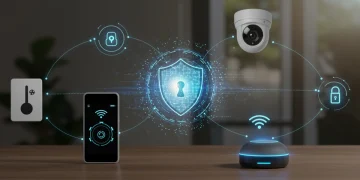
Smart Home Security in 2026: Protecting Your Connected Devices

Protecting your connected devices is critical in 2026, as smart home security faces increasingly sophisticated cyber threats requiring robust defenses.
As our homes become smarter, with every device from thermostats to door locks connected to the internet, the need for robust smart home security becomes critically important. By 2026, the landscape of cyber threats has evolved, making understanding and implementing effective protection strategies more vital than ever.
The evolving threat landscape for smart homes
The convenience offered by smart home devices is undeniable, but it comes with an inherent risk. As more devices connect, the attack surface for cybercriminals expands significantly. In 2026, threat actors are more sophisticated, employing advanced tactics to exploit vulnerabilities in connected ecosystems.
Understanding these evolving threats is the first step toward building a resilient defense. From ransomware targeting smart appliances to data breaches compromising personal information, the risks are multifaceted and constantly shifting.
New vectors of attack
Cybercriminals are constantly innovating, finding new ways to infiltrate smart home networks. These new vectors often exploit the very features designed for convenience, turning them into vulnerabilities.
- AI-powered phishing: Sophisticated AI generates highly convincing phishing attempts, tricking users into revealing credentials for smart home hubs.
- Supply chain attacks: Vulnerabilities introduced during the manufacturing process of smart devices can be exploited, making devices insecure before they even reach your home.
- Side-channel attacks: Exploiting physical characteristics of devices, like power consumption or electromagnetic emissions, to extract sensitive data.
The rise of IoT botnets
IoT devices, if not properly secured, can be conscripted into massive botnets, used for distributed denial-of-service (DDoS) attacks or other malicious activities. This not only compromises your device but also makes your home an unwitting participant in larger cybercrimes. The sheer number of insecure IoT devices makes them an attractive target for botnet operators.
The conclusion here is clear: neglecting the security of even a single smart device can have cascading effects, impacting not only your home but also the broader internet ecosystem. Proactive measures are no longer optional but essential for digital citizenship.
Foundational principles of smart home cybersecurity
Building a secure smart home in 2026 starts with establishing a strong foundation. This involves understanding core cybersecurity principles and applying them diligently to all aspects of your connected environment. It’s not just about installing a security camera; it’s about creating a holistic defense strategy.
Secure network architecture
Your home network is the backbone of your smart home. Securing it properly is the most critical step in protecting your devices from external intrusions. This goes beyond simply changing the default Wi-Fi password.
- Strong, unique passwords: Use complex passwords for your router and all smart devices, changing them regularly.
- Network segmentation: Create a separate guest network or VLAN for your smart devices to isolate them from your primary network. This limits potential damage if a smart device is compromised.
- Firewall configuration: Ensure your router’s firewall is properly configured to block unwanted incoming connections and monitor suspicious outgoing traffic.
Regular software updates
Software vulnerabilities are a primary target for attackers. Device manufacturers frequently release updates to patch these flaws. Neglecting updates leaves your devices exposed to known exploits that cybercriminals are actively using.
Always enable automatic updates whenever possible, and regularly check for manual updates for devices that don’t support automation. This simple step can significantly reduce your risk profile. Patching known vulnerabilities is a low-effort, high-impact security practice.
In essence, a secure smart home is an informed smart home. By adhering to foundational cybersecurity principles, you lay the groundwork for a robust defense against the ever-present threats of the digital world.
Advanced protection strategies for 2026
Beyond the basics, 2026 calls for advanced protection strategies to stay ahead of sophisticated cyber threats. These strategies leverage emerging technologies and proactive approaches to fortify your smart home against intrusions.
AI-powered threat detection
Artificial intelligence is no longer just for convenience; it’s a powerful ally in smart home security. AI-powered systems can analyze network traffic, device behavior, and environmental data to detect anomalies indicative of a cyberattack in real-time.
These systems learn your home’s normal patterns, making them highly effective at identifying unusual activity that might signal a breach. For example, an AI might flag a smart thermostat attempting to access an unusual external server, even if the device itself hasn’t been directly compromised.
Zero-trust architecture for home networks
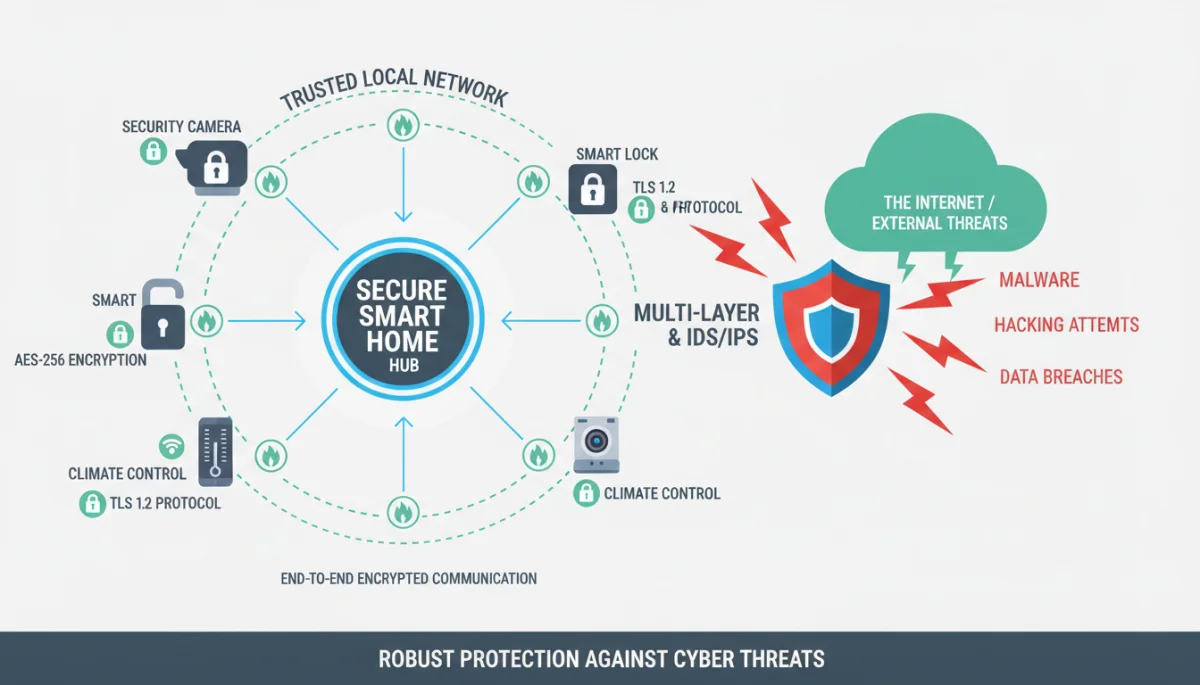
The traditional perimeter-based security model is insufficient for smart homes. A zero-trust approach assumes that no device, user, or application should be trusted by default, regardless of its location. Every access request is verified.
- Continuous verification: All devices and users must be authenticated and authorized before accessing network resources, even within the home network.
- Least privilege access: Devices are granted only the minimum permissions necessary to perform their functions, limiting the impact of a compromise.
- Micro-segmentation: Further divides the network into smaller, isolated segments, preventing lateral movement of attackers if one segment is breached.
Quantum-resistant encryption
As quantum computing advances, current encryption standards may become vulnerable. In 2026, adopting quantum-resistant encryption protocols for sensitive communications within your smart home is a forward-thinking measure. This ensures your data remains secure against future decryption capabilities.
Implementing these advanced strategies requires a deeper understanding of cybersecurity but offers a significantly enhanced level of protection, positioning your smart home at the forefront of digital defense. This proactive stance is crucial in the rapidly evolving cyber landscape.
Protecting your smart home privacy and data
Beyond preventing intrusions, safeguarding your privacy and data is a critical component of smart home security. Many smart devices collect vast amounts of personal information, from your daily routines to your conversations. Ensuring this data remains private is as important as preventing a physical break-in.
Understanding data collection practices
Before purchasing or connecting any smart device, take the time to understand its data collection policies. Many manufacturers collect data for various purposes, some of which may not be immediately obvious. Read the privacy policies carefully and be aware of what information is being gathered and how it’s being used.
Opt for devices from reputable companies with strong privacy commitments. Remember, if a product is free, you might be the product, with your data being the currency. Transparency from manufacturers is key here.
Minimizing data exposure
You can take proactive steps to limit the amount of data your smart devices collect and share. This often involves adjusting settings and being mindful of how you interact with your technology.
- Disable unnecessary features: Turn off microphones, cameras, or location tracking features if they are not essential for a device’s core function.
- Review app permissions: Regularly check the permissions granted to smart home apps on your smartphone and revoke any that seem excessive or unnecessary.
- Use privacy-focused settings: Configure devices to collect the minimum amount of data required for their operation, opting out of optional data sharing programs.
Secure data storage and transmission
Ensure that your smart devices use strong encryption for both data at rest (stored on the device or in the cloud) and data in transit (communicated over the network). Look for devices that support end-to-end encryption for sensitive communications.
For cloud-connected devices, understand where your data is stored and the security measures employed by the cloud provider. Prioritize local data processing whenever possible to reduce reliance on external servers.
Ultimately, robust privacy practices are integral to comprehensive smart home security, ensuring that your digital life remains truly your own.
User best practices and habits for a secure smart home
Technology alone cannot guarantee complete security; user behavior plays a pivotal role in maintaining a secure smart home. Developing smart habits and understanding best practices empowers you to be the first line of defense against cyber threats. Your actions can significantly strengthen or weaken your home’s digital perimeter.
Strong authentication methods
Passwords are your first line of defense, but they need to be strong and unique. Avoid using easily guessable information or reusing passwords across multiple accounts. In 2026, multi-factor authentication (MFA) is non-negotiable for all smart home accounts.
MFA adds an extra layer of security, requiring a second form of verification, such as a code from your phone or a biometric scan, in addition to your password. This makes it significantly harder for unauthorized individuals to gain access, even if they manage to steal your password.
Awareness and vigilance
Stay informed about the latest cyber threats and security best practices. Follow reputable cybersecurity news sources and pay attention to security alerts from your device manufacturers. A vigilant user is a secure user.
Be wary of suspicious emails, unsolicited calls, or unusual behavior from your smart devices. If something seems off, investigate it. Trust your instincts when it comes to potential security risks.
Regular security audits
Periodically review your smart home setup. Check all connected devices, their settings, and their update status. Remove any devices you no longer use or need, as they can become forgotten vulnerabilities.
Consider performing a basic security audit of your home network at least once a year. This can involve checking router settings, reviewing connected devices, and ensuring all software is up-to-date. This proactive approach helps identify and rectify potential weaknesses before they can be exploited.
By cultivating these user best practices, you transform from a passive consumer of smart technology into an active guardian of your digital sanctuary, significantly enhancing your overall smart home security posture.
The future of smart home security: 2026 and beyond
Looking ahead, the landscape of smart home security will continue to evolve, driven by technological advancements and the ever-present cat-and-mouse game with cybercriminals. Understanding these future trends can help homeowners prepare for what’s next and ensure their connected lives remain secure.
Decentralized security models
The reliance on centralized cloud servers for smart home operations introduces single points of failure and privacy concerns. Future security models are likely to shift towards more decentralized approaches, leveraging technologies like blockchain for secure, distributed device authentication and data management.
This could mean less reliance on a single manufacturer’s cloud infrastructure and more peer-to-peer security between devices, enhancing resilience and user control over data. Edge computing will also play a larger role, processing data locally to reduce transmission risks.
Biometric authentication advancements
While biometrics are already in use, 2026 will see more sophisticated and multi-modal biometric authentication integrated into smart home access. This could include advanced facial recognition, voice authentication with liveness detection, and even gait analysis for home entry.
These advanced methods offer enhanced convenience and security, making it harder for unauthorized individuals to gain physical or digital access to your home. The challenge will be balancing security with user privacy in their implementation.
Standardized security protocols and regulations
Currently, the smart home industry lacks uniform security standards, leading to a fragmented and often insecure ecosystem. As smart homes become ubiquitous, there will be a greater push for industry-wide security protocols and government regulations.
- Mandatory security by design: Regulations will likely require manufacturers to integrate security features from the initial design phase of a device, rather than as an afterthought.
- Interoperability standards: Common security frameworks will enable devices from different manufacturers to communicate securely, reducing vulnerabilities arising from incompatible systems.
- Consumer education mandates: Governments and industry bodies may mandate clearer labeling and education for consumers regarding device security and data privacy.
These developments promise a more secure and trustworthy smart home environment, but vigilance and proactive engagement from users will always remain essential. The future of smart home security is a shared responsibility.
Choosing secure smart home devices and services
The market is flooded with smart home devices, and not all are created equal in terms of security. Making informed choices about the devices and services you bring into your home is a foundational step in building robust smart home security. A cheap device might come with hidden security costs.
Researching device manufacturers
Before making a purchase, thoroughly research the manufacturer’s reputation for security and privacy. Look for companies that have a track record of transparent security practices, regular firmware updates, and clear privacy policies.
Avoid generic, no-name brands that may cut corners on security to offer lower prices. These devices often lack essential security features, receive infrequent updates, and can become significant vulnerabilities in your network.
Security certifications and standards
Look for devices that have received security certifications from independent organizations. While still evolving, various industry groups are developing standards and certifications to help consumers identify more secure products. These certifications can act as a helpful indicator of a manufacturer’s commitment to security.
Some examples include certifications related to IoT security frameworks or adherence to specific data protection regulations. These labels provide an extra layer of assurance about the device’s security posture.
Considering the entire ecosystem
When selecting smart home devices, think about how they integrate into your existing ecosystem. A fragmented system with devices from many different manufacturers can be harder to secure and manage. Opting for devices that are designed to work together securely can simplify your security management.
- Hub-based systems: Centralized smart home hubs often offer better security management and integration compared to individual devices operating independently.
- Vendor reputation: Stick to reputable vendors known for their commitment to security across their entire product line.
- Long-term support: Ensure the manufacturer provides long-term security updates and support for their devices, as this directly impacts their longevity and security.
By being a discerning consumer, you can build a smart home environment that is not only convenient but also inherently more secure from the ground up, reducing potential vulnerabilities and enhancing your peace of mind.
| Key Aspect | Brief Description |
|---|---|
| Evolving Threats | Sophisticated AI-powered phishing, supply chain attacks, and IoT botnets are major concerns. |
| Foundational Security | Strong network architecture, unique passwords, and regular software updates are critical. |
| Advanced Protection | AI threat detection, zero-trust models, and quantum-resistant encryption offer enhanced defense. |
| User Best Practices | Multi-factor authentication, vigilance, and periodic security audits are essential for users. |
Frequently asked questions about smart home security
In 2026, the biggest threats include AI-powered phishing, supply chain vulnerabilities in devices, and the proliferation of IoT botnets. These sophisticated attacks target both user credentials and device integrity, making robust, multi-layered security essential for protection.
Software updates are critically important. They patch known vulnerabilities that cybercriminals actively exploit. Neglecting updates leaves your devices exposed, turning them into easy targets. Always enable automatic updates or manually check regularly to ensure your devices remain secure against the latest threats.
Zero-trust architecture assumes no device or user can be trusted by default, even within your home network. Every access request is verified. In smart homes, this means continuous authentication, least privilege access for devices, and network micro-segmentation to prevent lateral movement of attackers.
Protecting data privacy involves understanding device data collection policies, disabling unnecessary features like microphones or cameras when not in use, and regularly reviewing app permissions. Prioritize devices with strong encryption for data storage and transmission, and choose reputable manufacturers with clear privacy commitments.
Yes, MFA is absolutely necessary. It adds a crucial layer of security by requiring a second verification method beyond just a password. This significantly reduces the risk of unauthorized access, even if your password is compromised, making it an essential practice for all smart home accounts.
Conclusion
The promise of a connected home in 2026 is immense, offering unparalleled convenience and efficiency. However, this digital integration demands an equally robust commitment to smart home security. The evolving threat landscape, characterized by sophisticated cyberattacks and privacy concerns, underscores the need for a multi-faceted approach to protection. By implementing foundational cybersecurity principles, adopting advanced protection strategies, prioritizing data privacy, and cultivating diligent user habits, homeowners can effectively safeguard their connected devices and ensure their digital sanctuary remains secure. The future of smart home security is a collaborative effort between innovative technology and informed, proactive users, working in tandem to build a resilient and trustworthy smart living environment.