Federal Unemployment Benefits 2026: The 26-Week Standard Explained

Understanding the 26-week standard for federal unemployment benefits in 2026 is essential for individuals navigating job loss, as it sets the baseline duration for financial assistance across states.
As we navigate the economic landscape of 2026, understanding the intricacies of federal unemployment benefits 2026 becomes more critical than ever. For many Americans facing job transitions or unexpected layoffs, these benefits serve as a vital safety net. This article delves into the 26-week standard, exploring its implications, variations, and what you need to know to navigate the system effectively.
The 26-Week Standard: A Foundation of Support
The 26-week standard for unemployment benefits has long been a cornerstone of the American social safety net. It represents the typical maximum duration an individual can receive state-funded unemployment insurance (UI) benefits. While often referred to in a federal context, it’s important to clarify that the core UI program is a joint federal-state endeavor, with states primarily responsible for administering benefits according to federal guidelines.
This standard provides a critical period of financial relief, allowing individuals to focus on their job search without immediate economic collapse. It aims to bridge the gap between employment, offering a temporary income replacement to cover essential living expenses. However, the application and interpretation of this standard can vary significantly from one state to another, impacting the real-world experience of beneficiaries.
Federal Guidelines and State Autonomy
While the 26-week duration is a widely recognized benchmark, it’s not a rigid federal mandate that every state must adhere to without exception. Federal law sets broad parameters, but states have considerable flexibility in designing their specific UI programs. This autonomy allows states to tailor benefits to their unique economic conditions and labor markets.
- Federal Unemployment Tax Act (FUTA): This act establishes the federal framework for state unemployment insurance programs, including funding mechanisms.
- State-Specific Laws: Each state enacts its own laws governing eligibility, benefit amounts, and duration, often within the 26-week guideline.
- Variations in Duration: Some states may offer fewer than 26 weeks of benefits, especially during periods of low unemployment, while others might provide extensions under certain circumstances.
Understanding this interplay between federal guidelines and state autonomy is crucial for anyone seeking to understand their potential benefits. The 26-week standard acts as a common reference point, but the specific duration and amount an individual receives will ultimately depend on their state of residence and its particular UI laws.
Eligibility Requirements for Federal Unemployment Benefits in 2026
Navigating the eligibility criteria for unemployment benefits in 2026 can be complex, as requirements are primarily set at the state level, albeit influenced by federal regulations. Generally, individuals must meet certain conditions to qualify for benefits, ensuring that the system supports those genuinely seeking re-employment.
The core principle is that benefits are intended for those who are unemployed through no fault of their own and are actively seeking work. This distinguishes unemployment insurance from other forms of social assistance, emphasizing its role as a temporary bridge during job transition.
Key Eligibility Criteria
While specific rules vary by state, several common criteria universally apply to qualify for unemployment benefits. These criteria are designed to ensure that the system is used responsibly and effectively.
- Monetary Eligibility: Applicants must have earned a certain amount of wages during a specified base period, typically the first four of the last five completed calendar quarters before filing a claim. This demonstrates a recent attachment to the workforce.
- Reason for Separation: Individuals must generally be unemployed through no fault of their own. This usually means being laid off due to lack of work, downsizing, or business closure. Voluntarily quitting a job without good cause or being fired for misconduct typically disqualifies an applicant.
- Availability for Work: Claimants must be able to work, available for work, and actively seeking suitable employment. This often involves registering with state employment services and documenting job search efforts.
- Work Search Requirements: States typically require claimants to make a certain number of job contacts each week, attend workshops, or participate in re-employment services. These requirements underscore the program’s goal of facilitating a return to employment.
Meeting these criteria is fundamental to receiving unemployment benefits. Prospective applicants should consult their state’s unemployment agency website for the most accurate and up-to-date information, as state laws can evolve.
State Variations: Beyond the 26-Week Standard
While the 26-week standard is a common reference point for unemployment benefits, it’s crucial to recognize that states have considerable leeway in determining their benefit durations and amounts. This flexibility leads to a diverse landscape of unemployment insurance programs across the United States in 2026.
Some states, particularly those with robust economies and strong fiscal positions, might offer benefits for the full 26 weeks. Conversely, other states, especially those with historically lower unemployment rates or different policy priorities, might cap benefits at a shorter duration. These variations can significantly impact the financial stability of individuals experiencing job loss.
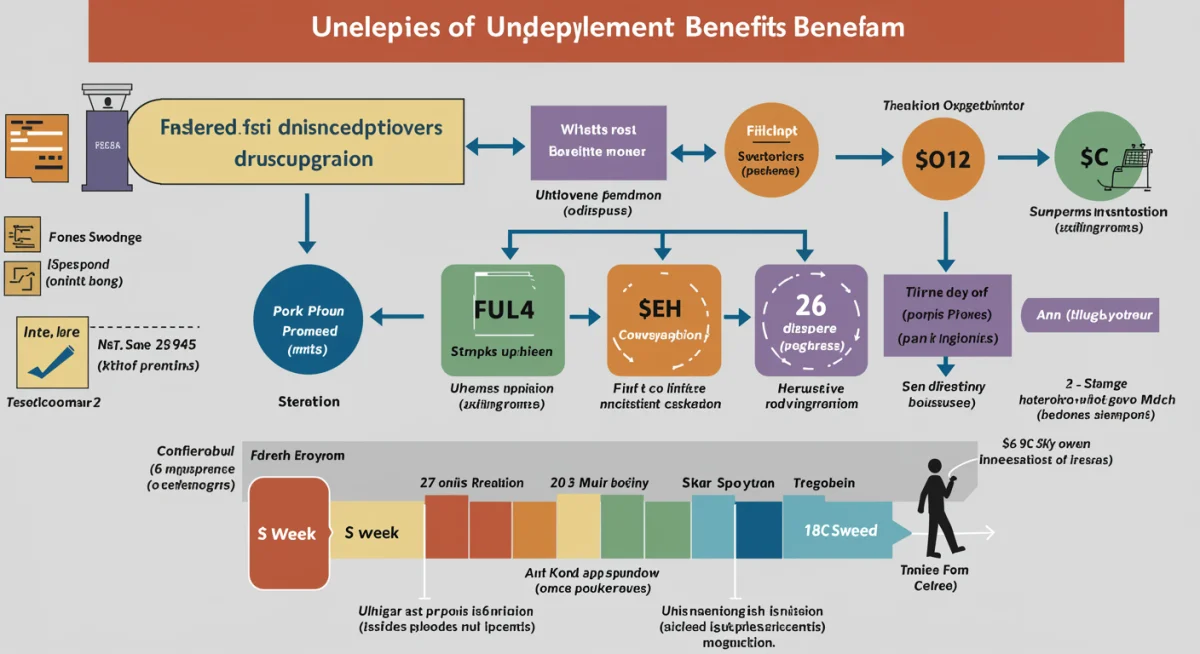
The differences extend beyond just the duration. Weekly benefit amounts, eligibility thresholds, and even the methodology for calculating benefits can vary widely. These disparities often reflect state-specific economic conditions, labor market demands, and legislative priorities.
Factors Influencing State Benefit Durations
Several factors contribute to why states deviate from or strictly adhere to the 26-week standard. Understanding these influences provides insight into the rationale behind varying state policies.
- Unemployment Rate: States with consistently low unemployment rates might opt for shorter benefit durations, assuming job seekers can find new employment more quickly.
- State Trust Fund Solvency: The financial health of a state’s unemployment insurance trust fund plays a significant role. States with healthier funds may be able to sustain longer benefit periods.
- Legislative Priorities: State legislatures periodically review and adjust unemployment laws based on political and economic considerations, which can impact benefit duration.
- Economic Recessions: During periods of economic downturn, federal legislation often provides for extended benefits, which can temporarily lengthen the duration beyond the standard state limits.
Therefore, while the federal framework provides guidelines, the actual experience of receiving unemployment benefits in 2026 is largely shaped by the specific laws and economic conditions of an individual’s state of residence. It is imperative for job seekers to research their state’s particular regulations.
Economic Impact of the 26-Week Standard in 2026
The 26-week standard for unemployment benefits has a multifaceted economic impact, influencing both individual households and the broader economy. In 2026, as economic conditions continue to evolve, the role of these benefits in stabilizing consumption and providing a safety net remains critical.
At the micro-level, unemployment benefits prevent a sharp decline in household income, allowing individuals to meet basic needs such as housing, food, and healthcare. This sustained purchasing power, even if reduced, helps prevent a more severe contraction in consumer spending during periods of job loss.
Macroeconomic Stabilization and Consumer Spending
Beyond individual households, unemployment benefits play a significant role in macroeconomic stabilization. By providing a floor to consumer spending, they help mitigate the ripple effects of job losses throughout the economy.
- Demand Support: Benefits inject money directly into the economy, maintaining a baseline level of demand for goods and services, which can help businesses avoid further layoffs.
- Reduced Poverty: Unemployment insurance significantly reduces the number of individuals falling into poverty during periods of unemployment, lessening the strain on other social welfare programs.
- Labor Market Efficiency: By allowing individuals more time to search for suitable employment rather than taking the first available job, benefits can contribute to better job matching and long-term labor market efficiency.
However, there’s also a debate about the potential disincentive effects of benefits on job search intensity. Economists often analyze the trade-off between providing adequate support and encouraging re-employment. Policymakers continuously seek to strike a balance that supports workers without unduly extending unemployment durations.
Applying for Federal Unemployment Benefits in 2026: A Step-by-Step Guide
Applying for unemployment benefits in 2026 requires a clear understanding of the process, which is primarily managed by state unemployment agencies. While the term ‘federal’ often comes up, remember that you’ll be interacting directly with your state’s Department of Labor or equivalent agency.
The application process is designed to verify eligibility and ensure that benefits are distributed efficiently and correctly. Being prepared with the necessary documentation and understanding the steps involved can significantly streamline the experience.
The Application Process
Generally, the application process for unemployment benefits follows a similar pattern across states. However, it’s always advisable to consult your specific state’s website for precise instructions and any unique requirements.
- Gather Information: Before starting, collect essential documents such as your Social Security number, driver’s license or state ID, mailing address, employment history for the past 18 months (including employer names, addresses, phone numbers, and dates of employment), and reasons for separation.
- File Your Claim: Most states offer online application portals. You can also apply by phone or in person. It’s crucial to file your claim as soon as you become unemployed, as benefits are typically processed from the date of application.
- Weekly Certifications: After filing your initial claim, you will usually need to file weekly or bi-weekly certifications. During these certifications, you’ll confirm your continued unemployment, availability for work, and report any earnings from part-time work or refusal of job offers.
- Actively Seek Work: Most states require claimants to actively search for work and document their efforts. Keep records of your job applications, interviews, and any other job search activities.
The process can take several weeks from initial application to receiving the first payment, especially if there are any issues with your claim. Patience and diligent record-keeping are key during this period.
Future Outlook for Unemployment Benefits Beyond 2026
Looking beyond 2026, the landscape of unemployment benefits is likely to continue evolving, shaped by technological advancements, shifts in the labor market, and ongoing policy debates. The 26-week standard, while a consistent benchmark, may face adjustments or be augmented by new programs.
Discussions around modernizing unemployment insurance often center on adapting to the gig economy, enhancing worker training programs, and ensuring the solvency of state trust funds. The goal is to create a system that is both responsive to economic shocks and supportive of long-term workforce development.
Potential Reforms and Innovations
Several areas are being explored for potential reforms and innovations in the unemployment benefits system. These changes aim to make the system more equitable, efficient, and relevant to future economic realities.
- Portable Benefits: As the gig economy grows, there’s increasing interest in portable benefits models that allow workers to accrue benefits regardless of their employment structure.
- Enhanced Training Integration: Future programs might more seamlessly integrate unemployment benefits with re-skilling and up-skilling initiatives, helping workers transition into new industries.
- Automatic Stabilizers: Proposals exist for triggers that would automatically extend benefits during economic downturns, providing more timely and effective relief without requiring legislative action.
- Modernized Technology: Upgrading outdated state IT systems is a continuous effort to improve the efficiency and accessibility of applying for and receiving benefits.
The future of unemployment benefits will likely involve a continuous balancing act between providing a robust safety net and fostering dynamic labor markets. These discussions are critical for ensuring that the system remains a relevant and effective support for American workers in the years to come.
| Key Aspect | Brief Description |
|---|---|
| 26-Week Standard | Common maximum duration for state unemployment benefits, though state variations exist. |
| Eligibility | Must be unemployed through no fault of your own, meet wage requirements, and actively seek work. |
| State Variations | Benefit amounts and durations vary significantly by state, influenced by local economic conditions. |
| Economic Impact | Supports consumer spending, stabilizes local economies, and reduces poverty during job transitions. |
Frequently asked questions about unemployment benefits in 2026
The 26-week standard refers to the typical maximum duration for which a state provides unemployment insurance benefits. It’s a widely adopted guideline, but states have the flexibility to offer shorter or, in specific circumstances, longer benefit periods based on their own laws and economic conditions.
The core unemployment insurance program is a joint federal-state initiative. While the federal government sets broad guidelines and funds administrative costs, states are responsible for administering the benefits, determining eligibility, and setting specific weekly amounts and durations. Federal extensions may occur during national crises.
To be eligible, you must typically be unemployed through no fault of your own, have earned sufficient wages in a base period, be able and available to work, and actively seek new employment. Specific monetary and work search requirements vary by state.
You should apply through your state’s unemployment agency, usually online, as soon as you become unemployed. You’ll need personal information, employment history, and reasons for separation. Be prepared to file weekly certifications and document your job search efforts.
While the 26-week standard has been a consistent benchmark, it is subject to ongoing policy discussions and potential reforms. Future changes might include adaptations for the gig economy, enhanced training integration, or automatic stabilizers during economic downturns, reflecting evolving labor market needs.
Conclusion
Understanding federal unemployment benefits 2026, particularly the 26-week standard, is essential for anyone navigating job loss in the United States. While the federal framework provides overarching guidance, the specifics of eligibility, duration, and benefit amounts are largely determined at the state level. This intricate system serves as a crucial economic stabilizer, offering a temporary financial bridge for individuals while they seek new employment. As the economy continues to evolve, ongoing discussions about modernizing and adapting unemployment insurance programs will be vital to ensure they remain effective and responsive to the needs of the American workforce.