SBIR Grants 2026: Secure Up to $250,000 for Your Innovation
Small Business Innovation Research (SBIR) Grants 2026 provide crucial federal funding opportunities for U.S. small businesses, offering up to $250,000 in seed capital for innovative research and development projects without equity dilution.
Are you a small business owner with a groundbreaking idea that could revolutionize an industry? The Small Business Innovation Research (SBIR) Grants 2026 program offers a unique opportunity to secure significant federal funding, potentially up to $250,000, to transform your innovative concepts into reality. This non-dilutive capital can be a game-changer for startups and small businesses looking to conduct vital research and development.
Understanding SBIR Grants: A Foundation for Innovation
The Small Business Innovation Research (SBIR) program is a highly competitive federal initiative designed to encourage small businesses in the U.S. to engage in federal research and development (R&D) that has the potential for commercialization. Often referred to as ‘America’s Seed Fund,’ SBIR grants aim to stimulate technological innovation, meet federal R&D needs, and increase private sector commercialization of innovations derived from federal R&D.
Established in 1982, the program mandates that all federal agencies with R&D budgets exceeding $100 million set aside a percentage of those funds for SBIR awards. This ensures a consistent flow of capital to small businesses working on cutting-edge technologies. The grants are structured into phases, each designed to de-risk the technology and advance its commercial viability.
The Core Purpose of SBIR Funding
SBIR grants are more than just financial aid; they are strategic investments in the nation’s innovation ecosystem. By funding small businesses, the program fosters economic growth, creates jobs, and addresses critical national challenges through technological advancements. It provides a crucial bridge between basic research and market-ready products.
- Stimulating Innovation: Encourages small businesses to explore novel scientific and technical concepts.
- Meeting Federal Needs: Directs research toward specific R&D objectives identified by federal agencies.
- Fostering Commercialization: Supports the transition of federally funded research into commercial products and services.
- Promoting Diversity: Aims to increase participation by small businesses owned by women and socially and economically disadvantaged individuals in federal R&D.
In essence, SBIR grants serve as a powerful catalyst for small businesses, enabling them to pursue ambitious R&D projects that might otherwise be out of reach due to funding constraints. This foundational understanding is key to navigating the program successfully.
Eligibility Requirements for SBIR Grants 2026
Securing SBIR Grants 2026 hinges on meeting specific and stringent eligibility criteria. These requirements ensure that the funding reaches legitimate small businesses capable of performing the proposed research and development. Understanding these parameters upfront is crucial to avoid wasting time on ineligible applications.
The primary eligibility criteria revolve around the business’s size, ownership, and operational structure. Federal agencies strictly adhere to these rules, so careful self-assessment is necessary before embarking on the application journey.
Key Eligibility Criteria
To qualify for an SBIR grant, your business must meet several fundamental conditions. These are non-negotiable and form the bedrock of your application’s viability.
- For-Profit Business: The company must be organized for profit, with its primary place of business in the United States.
- Ownership Structure: It must be at least 51% owned and controlled by one or more individuals who are citizens or permanent resident aliens of the United States, or by other for-profit small business concerns that are themselves 51% owned and controlled by U.S. citizens or permanent resident aliens.
- Employee Cap: The business must have no more than 500 employees, including affiliates. This is a crucial point, as affiliations can sometimes complicate the employee count.
- Principal Investigator (PI): The primary employment of the Principal Investigator (PI) must be with the small business at the time of award and for the duration of the project. ‘Primary employment’ typically means more than one-half of the PI’s time is spent with the small business.
It is important to note that these requirements can sometimes have nuances depending on the specific agency. For instance, some agencies might have additional requirements related to the type of research or the specific technological area. Always consult the specific solicitation for the most accurate and up-to-date information relevant to your proposed project. Ensuring complete compliance with these eligibility standards is the first critical step toward a successful SBIR application.
Navigating the SBIR Grant Phases: From Concept to Commercialization
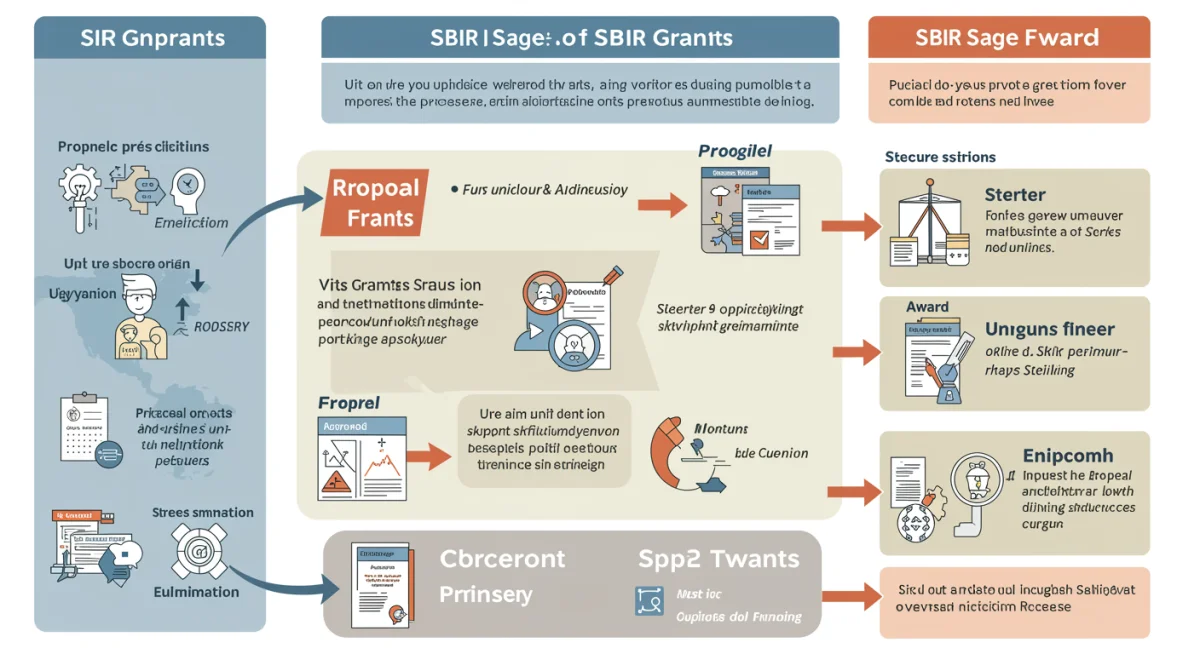
The Small Business Innovation Research (SBIR) program is structured into three distinct phases, each designed to progressively advance an innovative idea from concept validation to full commercialization. Understanding these phases is vital for any small business aspiring to secure SBIR Grants 2026, as they dictate the scope of work, funding levels, and strategic objectives at each stage.
This phased approach allows agencies to mitigate risk by funding initial exploratory research before committing to larger-scale development. It also provides a clear roadmap for businesses to refine their technology and demonstrate its market potential.
Phase I: Feasibility and Proof-of-Concept
Phase I is the entry point into the SBIR program. Its primary objective is to establish the scientific, technical, and commercial merit and feasibility of the proposed R&D effort. This phase typically involves a limited budget and a shorter duration, usually around 6 to 12 months.
- Funding Cap: Generally up to $250,000, though this can vary slightly by agency.
- Key Activities: Conducting preliminary research, experiments, and studies to prove the concept’s viability.
- Deliverables: A comprehensive report demonstrating technical feasibility and potential for commercialization.
A successful Phase I project typically demonstrates strong potential for further development and commercial application, paving the way for a Phase II application.
Phase II: Prototype Development and R&D
Building upon the success of Phase I, Phase II is where the significant R&D work takes place. This phase focuses on developing and demonstrating a prototype or a more advanced version of the technology. It involves a larger budget and longer duration, typically 2 years.
- Funding Cap: Can range from $750,000 to $1.5 million or more, depending on the agency and specific solicitation.
- Key Activities: Extensive R&D, prototype development, testing, and validation.
- Deliverables: A functional prototype, detailed technical reports, and a stronger commercialization plan.
Phase II is highly competitive and is generally awarded only to businesses that successfully complete Phase I and demonstrate strong potential for commercial impact. It is also common for agencies to offer Phase IIB grants for further commercialization activities.
Phase III: Commercialization
Phase III is the ultimate goal of the SBIR program: transitioning the developed technology into the marketplace. Unlike Phases I and II, Phase III does not involve direct SBIR funding. Instead, it requires the small business to obtain private sector investment or non-SBIR federal funding for commercialization.
- Funding Source: Private investment, non-SBIR federal contracts, or other sales revenue.
- Key Activities: Market entry, production, sales, and continued private sector R&D.
- Goal: Sustainable commercialization of the innovation.
The successful completion of all three phases signifies a significant achievement, demonstrating the technology’s technical merit and market readiness. This structured approach helps small businesses strategically plan their R&D efforts and maximize their chances of commercial success.
Crafting a Winning Proposal for SBIR Grants 2026
A successful application for SBIR Grants 2026 hinges on the quality and persuasiveness of your proposal. This document is your opportunity to convince federal agencies that your innovative idea is not only technically sound but also possesses significant commercial potential and aligns with their specific R&D needs. Crafting a winning proposal requires meticulous attention to detail, strategic planning, and clear communication.
Many promising technologies fail to secure funding due to poorly structured or unclear proposals. It’s not enough to have a brilliant idea; you must articulate it effectively and demonstrate your team’s capability to execute it.
Essential Components of a Strong SBIR Proposal
While specific requirements vary by agency, most SBIR proposals share common critical sections that must be addressed thoroughly and convincingly. Each section plays a vital role in presenting a holistic view of your project.
- Technical Merit and Innovation: Clearly articulate the problem your technology addresses, its innovative aspects, and how it represents a significant advancement over existing solutions. Provide a strong technical rationale and preliminary data if available.
- Research Plan: Detail your proposed R&D activities, including objectives, methods, experimental design, and anticipated results. This section must demonstrate a clear and feasible plan for achieving your Phase I goals.
- Team Qualifications: Highlight the expertise and experience of your Principal Investigator (PI) and key personnel. Emphasize their relevant scientific, technical, and project management skills.
- Commercialization Plan: Even in Phase I, agencies look for potential commercial impact. Outline your target market, competitive advantages, intellectual property strategy, and a preliminary plan for how the technology will transition to Phase II and ultimately to the marketplace.
- Budget Justification: Provide a detailed and well-justified budget that aligns with your proposed activities. Ensure all costs are reasonable, allowable, and allocable.
Beyond these core components, pay close attention to the specific solicitation’s instructions. Each agency issues its own solicitations with unique research topics, evaluation criteria, and formatting requirements. Tailoring your proposal precisely to these guidelines is paramount. Seeking feedback from mentors or experienced grant writers can also significantly improve your proposal’s quality and increase your chances of securing funding.
Key Agencies Offering SBIR Grants in 2026
Several federal agencies participate in the Small Business Innovation Research (SBIR) program, each with its own specific R&D priorities and funding opportunities. For businesses seeking SBIR Grants 2026, identifying the most relevant agency is a critical first step. Aligning your innovative project with an agency’s mission and research focus significantly increases your chances of success.
The participating agencies span a wide range of scientific and technological domains, from health and defense to energy and space exploration. This diversity ensures that a broad spectrum of small business innovations can find a potential funding home.
Major Participating SBIR Agencies
Understanding which agencies offer grants in your specific area of innovation is crucial. Here are some of the largest and most active SBIR agencies:
- Department of Defense (DoD): The largest SBIR program, focusing on technologies that enhance national security, including aerospace, advanced materials, cybersecurity, and robotics.
- Department of Health and Human Services (HHS): Primarily through the National Institutes of Health (NIH), this agency funds biomedical research, medical devices, diagnostics, and health IT.
- National Aeronautics and Space Administration (NASA): Supports innovations related to space exploration, aeronautics, earth science, and deep space missions.
- Department of Energy (DOE): Funds research in energy efficiency, renewable energy, advanced nuclear technologies, and environmental remediation.
- National Science Foundation (NSF): Focuses on early-stage, high-risk, high-reward research across all scientific and engineering disciplines with strong commercial potential.
Other significant agencies include the Department of Agriculture (USDA), Department of Commerce (DOC), Department of Education (ED), Department of Transportation (DOT), Environmental Protection Agency (EPA), and Department of Homeland Security (DHS). Each agency publishes its own solicitations, often multiple times a year, detailing specific topics of interest and application deadlines. Thoroughly researching agency websites and past awards can provide invaluable insights into their funding priorities and help you tailor your proposal to their specific needs. Choosing the right agency is about more than just finding a match; it’s about demonstrating a clear understanding of their mission and how your innovation contributes to it.
Maximizing Your Chances: Strategies for SBIR Grant Success
Securing SBIR Grants 2026 is highly competitive, but there are proven strategies that can significantly enhance your chances of success. Beyond simply meeting eligibility criteria and submitting a well-written proposal, a proactive and strategic approach can set your application apart. This involves understanding the nuances of the program, building strong relationships, and meticulously preparing every aspect of your submission.
Many successful SBIR recipients emphasize that the process is as much about strategy and persistence as it is about groundbreaking technology. Learning from others’ experiences and leveraging available resources can make a substantial difference.
Strategic Approaches to Boost Your Application
Implementing these strategies can help transform a good proposal into a winning one, increasing your likelihood of securing federal funding for your innovative project.
- Network with Program Managers: Engage with program managers at your target agencies well before the solicitation opens. They can offer invaluable insights into specific R&D priorities, provide feedback on your concept, and guide you towards relevant topics. This pre-submission interaction can be crucial.
- Attend Outreach Events: Participate in SBIR/STTR conferences, webinars, and workshops. These events provide opportunities to learn about agency priorities, network with other applicants, and receive direct advice from agency representatives.
- Leverage Support Resources: Utilize the many resources available to small businesses, such as Small Business Development Centers (SBDCs), local government contracting assistance centers (PTACs), and specialized SBIR consultants. These organizations often offer free or low-cost assistance with proposal writing, technical review, and commercialization planning.
- Focus on a Strong Commercialization Plan: Even in Phase I, agencies are looking for technologies with clear market potential. Develop a robust commercialization plan that outlines your market analysis, competitive landscape, intellectual property strategy, and pathways to revenue. This demonstrates foresight and market understanding.
- Seek Technical Review: Have your technical proposal reviewed by experts in your field who are not involved in your project. Their objective feedback can help identify weaknesses, clarify technical language, and strengthen your experimental design.
- Proofread Meticulously: Errors in grammar, spelling, or formatting can detract from the professionalism of your proposal. Ensure multiple individuals review the entire document for clarity, coherence, and compliance with all instructions.
Remember, the SBIR program is designed to fund high-risk, high-reward innovations. Don’t be afraid to propose ambitious ideas, but always back them up with solid technical rationale and a credible plan for execution and commercialization. Persistence is also key; many successful companies apply multiple times before receiving their first award.
Post-Award Management and Compliance for SBIR Grantees
Receiving SBIR Grants 2026 is a significant achievement, but it marks the beginning of a new phase: diligent post-award management and strict compliance with federal regulations. Proper management ensures the project progresses as planned, funds are utilized appropriately, and all reporting requirements are met. Failure to comply can lead to funding delays, audits, or even termination of the grant.
Grant management is a complex but essential aspect of federal funding. It requires meticulous record-keeping, clear communication with the funding agency, and a thorough understanding of applicable federal guidelines.
Key Aspects of Post-Award Management
Effectively managing your SBIR grant involves several critical areas, each demanding careful attention throughout the project lifecycle.
- Financial Management: Maintain accurate and detailed financial records of all expenditures. Ensure that costs are allowable, allocable, and reasonable according to federal cost principles (e.g., OMB Uniform Guidance). Regular reconciliation of expenses against the approved budget is crucial.
- Technical Reporting: Submit timely and comprehensive technical progress reports as required by the agency. These reports detail the work accomplished, challenges encountered, planned activities for the next period, and any changes to the project scope or personnel.
- Intellectual Property (IP) Management: Understand and comply with federal regulations regarding intellectual property developed under the grant. This typically involves disclosing inventions to the funding agency and adhering to Bayh-Dole Act provisions, which generally allow small businesses to retain title to inventions.
- Compliance with Federal Regulations: Adhere to all applicable federal laws and regulations, including those related to environmental protection, human subjects research, animal welfare, and responsible conduct of research. Specific agencies may have additional compliance requirements.
- Communication with Agency: Maintain open and transparent communication with your assigned grant officer or program manager. Inform them promptly of any significant issues, delays, or proposed changes to the project. Proactive communication can prevent minor issues from escalating.
Many agencies offer resources and guidance for grant recipients on post-award management. Participating in agency-specific post-award webinars or workshops can be highly beneficial. Establishing robust internal processes for financial tracking, reporting, and compliance from the outset will significantly streamline the management process and ensure a smooth project execution, ultimately paving the way for potential Phase II and commercial success.
| Key Aspect | Brief Description |
|---|---|
| Eligibility | U.S. for-profit small businesses (under 500 employees), U.S. owned and controlled. |
| Phases of Funding | Phase I (feasibility), Phase II (R&D), Phase III (commercialization, non-SBIR funded). |
| Proposal Focus | Technical merit, innovation, team qualifications, commercialization potential, detailed budget. |
| Key Agencies | DoD, HHS (NIH), NASA, DOE, NSF are major grant providers. |
Frequently Asked Questions About SBIR Grants 2026
The main goal of SBIR Grants 2026 is to stimulate technological innovation from U.S. small businesses, meet federal research and development needs, and foster the commercialization of new technologies. It helps small businesses develop high-risk, high-reward innovations.
No, a business must have no more than 500 employees, including affiliates, to be eligible for an SBIR grant. This is a strict eligibility requirement designed to ensure the funding supports truly small businesses, as defined by federal standards.
Phase I funding focuses on proving the feasibility and scientific merit of an idea, typically with smaller awards (up to $250,000). Phase II funding, awarded after a successful Phase I, supports the extensive research and development and prototype creation, with much larger awards.
No, SBIR funding is a grant, not a loan. It is non-dilutive capital, meaning the government does not take an equity stake in your company in exchange for the funding. This allows small businesses to retain full ownership of their innovations.
The commercialization plan is extremely important. Federal agencies want to see that the funded research has a clear path to market and will ultimately benefit the U.S. economy. A strong commercialization plan, even in Phase I, significantly enhances a proposal’s competitiveness.
Conclusion
The Small Business Innovation Research (SBIR) Grants 2026 program represents an unparalleled opportunity for innovative U.S. small businesses to secure vital federal funding. By understanding the program’s eligibility requirements, navigating its phased structure, meticulously crafting a compelling proposal, and diligently managing post-award compliance, entrepreneurs can unlock significant capital to drive their research and development efforts. This strategic investment not only propels individual businesses forward but also fuels the nation’s technological advancement and economic growth, demonstrating the profound impact of well-structured government programs on the innovation landscape. With careful preparation and a clear vision, your small business could be among the next to benefit from America’s Seed Fund.